


Page 88 - World of Animals - Book of Sharks & Ocean Predators
P. 88
Sharks & Ocean Predators
                               WorldMags.net

       Endangered


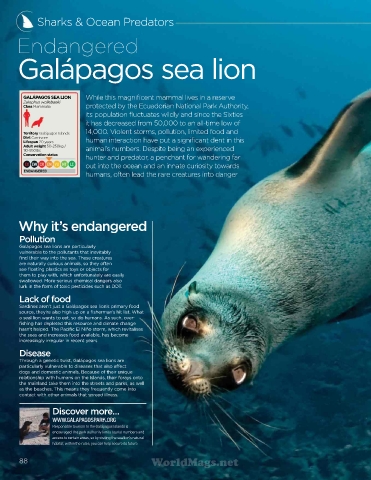
       Galápagos sea lion


         GALÁPAGOS SEA LION    While this magnificent mammal lives in a reserve
         Zalophus wollebaeki
         Class Mammalia        protected by the Ecuadorian National Park Authority,
                               its population fluctuates wildly and since the Sixties

                               it has decreased from 50,000 to an all-time low of
                               14,000. Violent storms, pollution, limited food and
         Territory Galápagos Islands
         Diet Carnivore

         Lifespan 20 years     human interaction have put a significant dent in this
         Adult weight 50-250kg /
         110-550lbs            animal’s numbers. Despite being an experienced
         Conservation status
                               hunter and predator, a penchant for wandering far
                               out into the ocean and an innate curiosity towards
         ENDANGERED
                               humans, often lead the rare creatures into danger


        Why it’s endangered


        Pollution
        Galápagos sea lions are particularly
        vulnerable to the pollutants that inevitably

        find their way into the sea. These creatures
        are naturally curious animals, so they often
        see floating plastics as toys or objects for

        them to play with, which unfortunately are easily
        swallowed. More-serious chemical dangers also
        lurk in the form of toxic pesticides such as DDT.
        Lack of food
        Sardines aren’t just a Galápagos sea lion’s primary food

        source, they’re also high up on a fisherman’s hit list. What
        a seal lion wants to eat, so do humans. As such, over-
        fishing has depleted this resource and climate change

        hasn’t helped. The Pacific El Niño storm, which revitalises

        the seas and increases food available, has become
        increasingly irregular in recent years.
        Disease
        Through a genetic twist, Galápagos sea lions are
        particularly vulnerable to diseases that also affect
        dogs and domestic animals. Because of their unique
        relationship with humans on the Islands, their forays onto
        the mainland take them into the streets and parks, as well
        as the beaches. This means they frequently come into
        contact with other animals that spread illness.

                   Discover more…
                   WWW.GALAPAGOSPARK.ORG
                   Responsible tourism to the Galápagos Islands is
                   encouraged: the park authority limits tourist numbers and
                   access to certain areas, so by visiting the sea lion’s natural
                   habitat, within the rules, you can help secure its future.

        88
                                                      WorldMags.net
                                                      WorldMags.net

