


Page 129 - (DK) Home Doctor: Providing practical advice on home treatments
P. 129
COMMON CONDITIONS: WOMEN’S PROBLEMS  127

         Premenstrual syndrome (PMS)


              Women with premenstrual syndrome (PMS) are troubled by a variety of symptoms that start about 7 days
              before a menstrual period and ease when the period begins. You may feel irritable, angry, depressed, or
              anxious for no particular reason. You may also be absentminded and find it hard to concentrate. Physical
              symptoms include headache, sleep problems, food cravings, constipation, bloating, weight gain, and breast
              tenderness or lumpiness. Stress may contribute to the problem.

              See also Difficulty sleeping, p.17; Poor memory, p.25; Headache, p.85; Bloating and flatulence,
              p.108; Constipation, p.115; Breast pain and lumpy breasts, pp.124–125.


              See your doctor first
                                                                       PREVENTION
              Arrange to see your doctor if you are not sure
              that your symptoms are due to PMS.            Controlling PMS These longer-term steps
                                                            may prevent some symptoms of PMS developing and
                                                            help you cope better with those that remain.
         What you can do yourself                           ● Keep a journal for 3 months, noting any factors that
                                                            make PMS symptoms worse, such as particular foods
              There are a number of remedies that may help  or stress at work, so you can avoid them in the future.
              PMS. Use them before the first symptoms develop.  ● Try a course of vitamin B to help prevent
                                                                                  6
                                                                symptoms (see NATURAL REMEDIES, below).
              ● Eat regularly to keep your sugar levels steady
                                                            ● Go for a brisk walk for 20–30 minutes, 5 days a
              and keep you from becoming anxious and irritable.
                                                            week, or try swimming or practicing yoga regularly.
              Have plenty of carbohydrates, such as pasta and
              potatoes, and increase your intake of fruit and
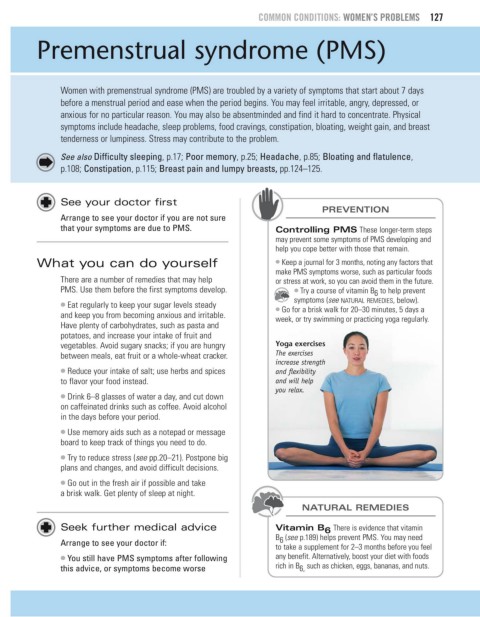
              vegetables. Avoid sugary snacks; if you are hungry  Yoga exercises
              between meals, eat fruit or a whole-wheat cracker.  The exercises
                                                            increase strength
              ● Reduce your intake of salt; use herbs and spices  and flexibility
              to flavor your food instead.                  and will help
                                                            you relax.
              ● Drink 6–8 glasses of water a day, and cut down
              on caffeinated drinks such as coffee. Avoid alcohol
              in the days before your period.
              ● Use memory aids such as a notepad or message
              board to keep track of things you need to do.
              ● Try to reduce stress (see pp.20–21). Postpone big
              plans and changes, and avoid difficult decisions.
              ● Go out in the fresh air if possible and take
              a brisk walk. Get plenty of sleep at night.
                                                                  NATURAL REMEDIES

              Seek further medical advice                   Vitamin B  6  There is evidence that vitamin
                                                            B (see p.189) helps prevent PMS. You may need
              Arrange to see your doctor if:                 6
                                                            to take a supplement for 2–3 months before you feel
              ● You still have PMS symptoms after following  any benefit. Alternatively, boost your diet with foods
              this advice, or symptoms become worse         rich in B such as chicken, eggs, bananas, and nuts.
                                                                  6,

