


Page 274 - (DK Eyewitness) Travel Guide - Rome
P. 274
272 ROME AREA B Y AREA
d Ostia Antica
Viale dei Romagnoli 717. Site is 25 km
(16 miles) southwest of Rome.
Tel 06-5635 0215. q Piramide, then
train from nearby Porta San Paolo
station. Excavations and museum:
Open 8:30am–1 hour before sunset
(last adm: 1 hour before closing).
Closed 1 Jan, 1 May, 25 Dec. & Free
on first Sun of the month. = - 7
∑ ostiaantica.beniculturali.it
In Republican times Ostia was
Rome’s main commercial port
and a military base defending
the coastline and the mouth of
the Tiber. The port continued to
flourish under the Empire,
despite the development of
Portus, a new port slightly to the
northwest, in the 2nd century
AD. Ostia’s decline began in the
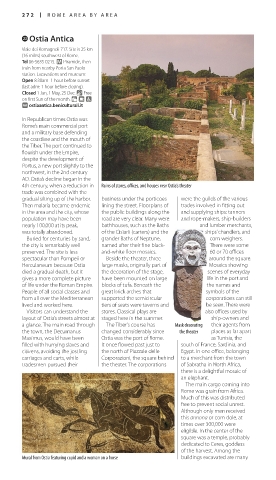
4th century, when a reduction in Ruins of stores, offices, and houses near Ostia’s theater
trade was combined with the
gradual silting up of the harbor. business under the porticoes were the guilds of the various
Then malaria became endemic lining the street. Floorplans of trades involved in fitting out
in the area and the city, whose the public buildings along the and supplying ships: tanners
population may have been road are very clear. Many were and rope-makers, ship-builders
nearly 100,000 at its peak, bathhouses, such as the Baths and lumber merchants,
was totally abandoned. of the Cisiarii (carters) and the ships’ chandlers, and
Buried for centuries by sand, grander Baths of Neptune, corn weighers.
the city is remarkably well named after their fine black- There were some
preserved. The site is less and-white floor mosaics. 60 or 70 offices
spectacular than Pompeii or Beside the theater, three around the square.
Herculaneum because Ostia large masks, originally part of Mosaics showing
died a gradual death, but it the decoration of the stage, scenes of everyday
gives a more complete picture have been mounted on large life in the port and
of life under the Roman Empire. blocks of tufa. Beneath the the names and
People of all social classes and great brick arches that symbols of the
from all over the Mediterranean supported the semicircular corporations can still
lived and worked here. tiers of seats were taverns and be seen. There were
Visitors can understand the stores. Classical plays are also offices used by
layout of Ostia’s streets almost at staged here in the summer. ship-owners and
a glance. The main road through The Tiber’s course has Mask decorating their agents from
the town, the Decumanus changed considerably since the theater places as far apart
Maximus, would have been Ostia was the port of Rome. as Tunisia, the
filled with hurrying slaves and It once flowed past just to south of France, Sardinia, and
citizens, avoiding the jostling the north of Piazzale delle Egypt. In one office, belonging
carriages and carts, while Corporazioni, the square behind to a merchant from the town
tradesmen pursued their the theater. The corporations of Sabratha in North Africa,
there is a delightful mosaic of
an elephant.
The main cargo coming into
Rome was grain from Africa.
Much of this was distributed
free to prevent social unrest.
Although only men received
this annona or corn dole, at
times over 300,000 were
eligible. In the center of the
square was a temple, probably
dedicated to Ceres, goddess
of the harvest. Among the
Mural from Ostia featuring cupid and a woman on a horse buildings excavated are many
US_272-273_EW_Rome_US.indd 272 15/03/17 4:21 pm

