


Page 262 - (DK) I Can’t Believe It! 2
P. 262
260
           The tongue
        TRUE or
      FALSE?
    has taste zones


     Taste maps took off in the 20th century,
     when it was thought the tongue could

     be divided into taste zones. But then
     scientists discovered that different

     tastes can be detected everywhere
     on the tongue—so there really is no
     accounting for taste!


                                         Umami comes from a Japanese
                                          word, translated as “pleasant,
      TASTE BASE                        savory taste.” It was scientifically
                                          indentified in 1908 by Kikunae
                                            Ikeda, a professor at Tokyo
                                                Imperial  University.


                                            Olives are often considered
                                          “an acquired taste”—they are
                                          disliked at first but then liked
                                          after trying them a few times.


                                            Various parts of the tongue
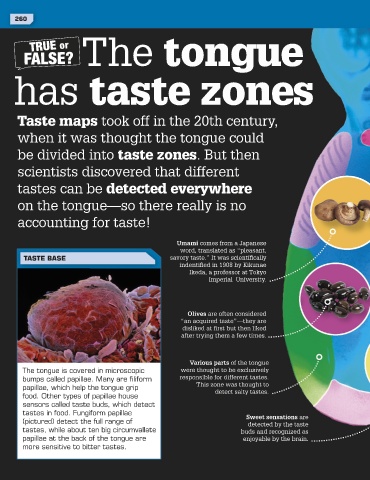
      The tongue is covered in microscopic   were thought to be exclusively
      bumps called papillae. Many are filiform   responsible for different tastes.
      papillae, which help the tongue grip    This zone was thought to
                                                  detect salty tastes.
      food. Other types of papillae house
      sensors called taste buds, which detect
      tastes in food. Fungiform papillae
      (pictured) detect the full range of                Sweet sensations are
                                                         detected by the taste
      tastes, while about ten big circumvallate         buds and recognized as
      papillae at the back of the tongue are            enjoyable by the brain.
      more sensitive to bitter tastes.


   US_260_261_309600_Taste_and_smell.indd   260                           19/12/17   3:48 pm

