


Page 396 - (DK Eyewitness) Travel Guide - South Africa
P. 396
394 TR A VELLERS ’ NEEDS
The Flavours of South Africa
In 1652, the Dutch East India Company established a
refreshment station in the Cape to provide its ships
with fresh supplies. These early settlers learned much
from the local people who were hunter-gatherers, and a
multi-ethnic cuisine began to emerge. The spice traders
brought exotic flavours to the country, and the diversity
of ingredients increased with the arrival of British, Indian
and German settlers. Finally, the French Huguenots
contributed culinary finesse. This range of influences is Rooibos tea
evident today in both traditional and modern dishes.
traditional curry ingredients these cooks soon learned how
such as turmeric, ginger, to prepare traditional Dutch
cinnamon, cardamom, cloves fare such as melktert (custard
and chilies, Cape Malay cuisine tart), adding cinnamon and
is never fiery. Meat is often grated nutmeg to suit their
cooked with fruit, marrying own tastes. Other South
sweet and savoury flavours, African baked puddings and
while fish, especially snoek and tarts show a strong Dutch
seafood, is also important. influence, while the delicious
Malay cooks were much fruit preserves are mainly
sought after by the settlers and French Huguenot in origin.
Sea bass Squid
Preparing for a braai at a restaurant on the Oysters Prawns Orange roughy
West Coast Mussels
Cape Malay Cooking
The Malay slaves, who were
brought from Java to the Cape
Colony in the late 1600s,
carried with them an intimate
knowledge of spices that had a
profound influence on Cape
cooking. Authentic specialities
can still be found in Cape
Town’s historic Bo-Kaap district.
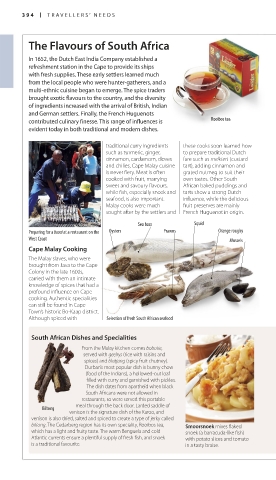
Although spiced with Selection of fresh South African seafood
South African Dishes and Specialities
From the Malay kitchen comes bobotie,
served with geelrys (rice with raisins and
spices) and blatjang (spicy fruit chutney).
Durban’s most popular dish is bunny chow
(food of the Indians), a hollowed-out loaf
filled with curry and garnished with pickles.
The dish dates from apartheid when black
South Africans were not allowed in
restaurants, so were served this portable
Biltong meal through the back door. Larded saddle of
venison is the signature dish of the Karoo, and
venison is also dried, salted and spiced to create a type of jerky called
biltong. The Cedarberg region has its own speciality, Rooibos tea, Smoorsnoek mixes flaked Bobotie is minced beef, spiced
which has a light and fruity taste. The warm Benguela and cold snoek (a barracuda-like fish) with bay and turmeric,
Atlantic currents ensure a plentiful supply of fresh fish, and snoek with potato slices and tomato topped with an egg custard
is a traditional favourite. in a tasty braise. and baked.
394-395_EW_South_Africa.indd 394 25/05/17 2:48 pm

