


Page 54 - Fish and Amphibians (Britannica Illustrated Science Library)
P. 54
51                                                                                                          650 feet (200 m)                           3,300 feet (1,000 m)                    13,200 feet (4,000 m)
                             water's temperature decreases, as does the amount of light. These
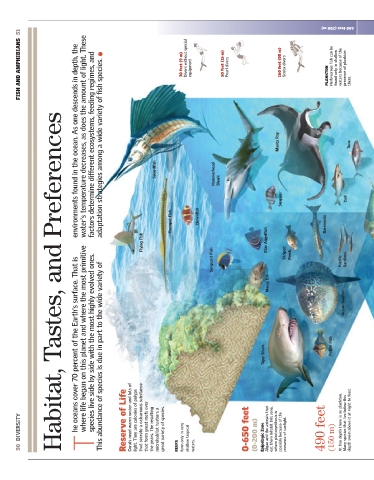
       FISH AND AMPHIBIANS                                  30 feet (9 m) Divers without special  equipment  50 feet (15 m)  Pearl divers  160 feet (50 m)  Scuba divers  PLANKTON Herbivorous fish can be  found only in shallow waters because of the  presence of plankton  there.  1,150 feet (350 m)  S.P.350 saucer of  Cousteau  1,300 feet (400 m)  JIM diving suit   (1970)  FATAL LIGHT  Predators of the 3,000 feet (915 m) deep use their  Barton bathosphere bioluminescence to  (1
                          environments found in the ocean. As one descends in depth, the
                               factors determine different ecosystems, feeding regimes, and
                                  adaptation strategies among a wide variety of fish species.


                     Habitat, Tastes, and Preferences


                                                                                          Manta Ray               Tuna                         Spotted  Eagle Fish                     As a form of adaptation, the retinas of these carnivores are sensitive only to the color blue, which is the color that  The Greatest Depth The bathyscape Trieste holds the record for the maximum depth achieved by any submarine vehicle. In 1960 it descended into the Mariana Trench to 36,000 feet (


                                                   Swordfish          Hammerhead  Shark                                                                                               Giant  Grouper  Dragonfish


                                                                                           Snapper              Cod                           Eel     Red Starry  Ray                                                   Football Fish


                                                        Trumpet Fish  Clownfish                           Barracuda             Dolphin Fish                                                 California  Slickhead


                                               Flying Fish                             Blue Angelfish                                                                         Marine Serpent                  Gulper Eel  Toadfish
                             where life began on this planet and where the most primitive
                                                                     Sergeant Fish           Striped  Perch    Pacific  Sardines       Bonefish
                               species live side by side with the most highly evolved ones.
                          he oceans cover 70 percent of the Earth's surface. That is
                                  This abundance of species is due in part to the wide variety of
                                                                                       Moray Eel                                                Pineapple Fish  Sixgill Shark

                                                                                                                Ocean Sunfish                                                                               Fangtooth (Ogrefish)


                                                                                      Tiger Shark           Puffer Fish                         Angel Shark                      Butterfly Fish  Queenfish  Tripod Fish     volcanic phenomena take place that constitute a catalyst for life. Lava from the volcanoes cools quickly, solidifies, and forms chimneys around which an explosion of microscopic (bacteria) and macroscopic (infaunal worms) life occurs that can serve as food for
                                                                                                                                                      BOTTOM FEEDERS At any given depth of the ocean floor, bottom feeders can be found wallowing in the mud searching for food.  Volcanoes   In some abyssal plains


       DIVERSITY                         Reserve of Life Corals need warm water and lots of light. They are colonies of polyps that secrete a calcareous substance that form great reefs over the years. The resulting microhabitat harbors a great variety of species.  form only in very  0-650 feet  (0-200 m)  Epipelagic Zone Algae and the animals that eat them inhabit this zone, where photosynthesis is possible because of the  presence of sunlight.  490 feet  (150 m)  At this dep


       50                      T                          REEFS   shallow tropical  waters.                                                                                 bioluminescent,  Below      and starfish.  HEAT FOR LIFE

