


Page 7 - BBC Wildlife Volume 36 #06
P. 7
The percentage of the British public who would
                          like to know their wildflowers better, according                     CHRI    SS
                          to research for Plantlife in 2017. Fifteen per cent
         70%              of people polled couldn’t name any wildflowers.                      PACK
                                                                                                    KHAM’S
                                                                                              MUST
                                                                                                     T-SEE


                                                                                     Q WILDFLOWERS
                                                                                     BRITAIN
                                                                                     IN BLOOM

                                                                                         rimming with colour and buzzing
                                                                                         with pollinators, road verges are
                                                                                     Ba daily delight in early summer.
                                                                                     A survey for the charity Plantlife
                                                                                     found that they collectively host
                                                                                     more than 720 species of wildflower,
                                                                                     almost a hundred of which are at risk
                                                                                     or near-threatened in Britain. With
                                                                                     so much agricultural land farmed
                                                                                     intensively and many woodlands in
                                                                                     poor condition, the nation’s verges
                                                                                     have become important refuges.
                                                                                     Unfortunately, many verges are
                                                                                     themselves badly maintained
                                                                                     nowadays, either mown too early
                                                                                     and frequently or swamped by dense
                                                                                     growth of nettles and brambles.
                                                                                       One of the causes is a worrying
                                                                                     lack of botanical knowhow among the
                                                                                     general population. Widespread
                                                                                     ‘plant blindness’ leads us to
                                                                                     undervalue the wild strips of
                                                                                     grassland by roads and motorways.
                                                                                     Now in its second year, Plantlife’s
                                                                                     Great British Wildflower Hunt is part
                                                                                     of a drive to get more people
                                                                                     interested in our rich floral heritage.
                                                                                     We’re being encouraged to rediscover
                                                                                     the simple joy of picking poseys of
                                                                                     wildflowers – responsibly, of course.
                                                                                     When more than half of Britons can’t
                                                                                     recognise a plant as common as red
                                                                                     clover, we have problem.

                                                                                     GET INVOLVED Take part in the Great
                                                                                     British Wildflower Hunt and see Plantlife’s
                                                                                     code of conduct for picking wildflowers:
                                                                                     www.plantlife.org.uk/wildflowerhunt


                                                                                            NOT ONLY DO
                                                                                      ` FLOWERY
                                                                                     VERGES BRIGHTEN
                                                                                     OUR JOURNEYS,
                                                                                     THEY ARE VITAL
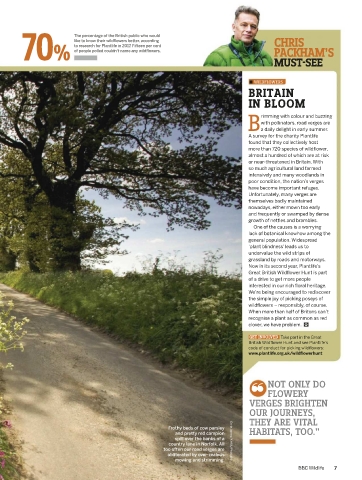
                                                          Frothy beds of cow parsley
                                                            and pretty red campion   HABITATS, TOO.”
                                                            spill over the banks of a
                                                          country lane in Norfolk. All   Ernie James/NHPA/Photoshot
                                                        too often our road verges are
                                                          obliterated by over-zealous
                                                            mowing and strimming.
                                                                                                      BBC Wildlife  7

