


Page 8 - BBC Wildlife Volume 36 #06
P. 8
WILD JUNE


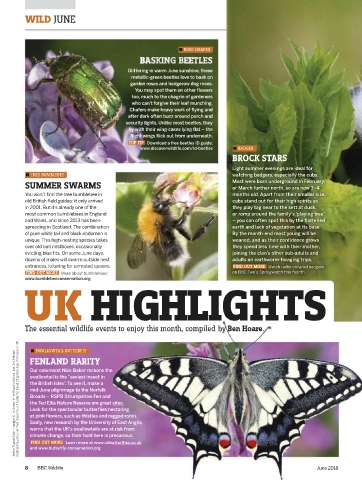
                                                              Q ROSE CHAFER
                                                BA             E EE TLES
                                            Glittering in warm June sunshine, these
                                             metallic-green beetles love to bask on
                                             garden roses and hedgerow dog roses.
                                               You may spot them on other flowers
                                              too, much to the chagrin of gardeners
                                              who can’t forgive their leaf munching.
                                             Chafers make heavy work of flying and
                                            after dark often buzz around porch and
                                            security lights. Unlike most beetles, they
                                             fly with their wing-cases lying flat – the
                                             flight wings flick out from underneath.
                                             TOP TIP  Download a free beetles ID guide:
                                                 www.discoverwildlife.com/id-beetles  Q BADGER
                                                                                BROCK STARS
                                                                                Light summer evenings are ideal for
          Q TREE BUMBLEBEE                                                      watching badgers, especially the cubs.
                                                                                Most were born underground in February,
          SUMMER SWARMS                                                         or March further north, so are now 3–4
          You won’t find the tree bumblebee in                                   months old. Apart from their smaller size,
          old British field guides: it only arrived                              cubs stand out for their high spirits as
          in 2001. But it’s already one of the                                  they play tag near to the sett at dusk,
          most common bumblebees in England                                     or romp around the family’s ‘playing tree’
          and Wales, and since 2013 has been                                    – you can often spot this by the flattened
          spreading in Scotland.The combination                                 earth and lack of vegetation at its base.
          of pure white tail and black abdomen is                               By the month-end most young will be
          unique.This high-nesting species takes                                weaned, and as their confidence grows
          over old bird nestboxes, occasionally                                 they spend less time with their mother,
          evicting blue tits. On some June days,                                joining the clan’s other sub-adults and
          dozens of males will swarm outside nest                               adults on earthworm-foraging trips.
          entrances, loitering for unmated queens.                              FIND OUT MORE Watch radio-collared badgers
          FIND OUT MORE More about bumblebees:                                  on BBC Two’s Springwatch this month.
          www.bumblebeeconservation.org g

         UK HIGHLIGHTS
                    K


         The essential wildlife event ts to enjoy this month, compiled        Ben Hoare.

       L   Q SWALLOWTAIL BUTTERFLY
      ott Neep; thr ft: Ross Hodd nott; bat: Er c Médard; redshank & yellowhammer: Steve Round; butterfly: David Chapman; bee: Will Watson/NPL  FENLAND RARITY


           Our columnist Nick Baker reckons the
           swallowtail is the “sexiest insect in
           the British Isles”. To see it, make a
           mid-June pilgrimage to the Norfolk
           Broads – RSPB Strumpshaw Fen and
           the Ted Ellis Nature Reserve are great sites.
           at pink flowers, such as thistles and ra agged robin.
      Beet e: Rupert Sosk n; badger: E  Look for the spectacular butterflies ne ectaring
           Sadly, new research by the University of East Anglia
           warns that the UK’s swallowtails are at t risk from
           climate change, so their hold here is precarious.
           FIND OUT MORE Learn more at www.ukbutterflies.co.uk
           and www.butterfly-conservation.org


          8   BBC Wildlife                                                                                  June 2018

