


Page 116 - (DK Eyewitness) Travel Guide - Italian Riviera
P. 116
114 THE IT ALIAN RIVIER A AREA B Y AREA
4 Portofino Peninsula
This headland extends for around 3 km (2 miles) out to sea
and separates the Paradiso and Tigullio gulfs. The southern
part, hot and dry, has high cliffs that enclose gorgeous inlets
hidden in the Mediterranean maquis; on the northern side,
woods of chestnut trees dominate. The small area is
extraordinarily rich botanically, and its favourable position has
drawn human settlements since antiquity: Portus Delphini (the
bay was, and still is, known for its large dolphin population)
was an important settlement in the Roman era. Today, the
peninsula is dotted with impossibly picturesque hamlets and
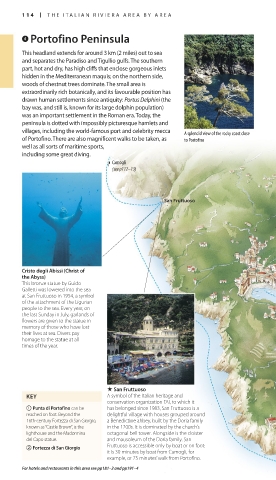
villages, including the world-famous port and celebrity mecca A splendid view of the rocky coast close
of Portofino. There are also magnificent walks to be taken, as to Portofino
well as all sorts of maritime sports,
including some great diving.
Camogli
(see p112–13)
San Fruttuoso
Cristo degli Abissi (Christ of
the Abyss)
This bronze statue by Guido
Galletti was lowered into the sea
at San Fruttuoso in 1954, a symbol
of the attachment of the Ligurian
people to the sea. Every year, on
the last Sunday in July, garlands of
flowers are given to the statue in
memory of those who have lost
their lives at sea. Divers pay
homage to the statue at all
times of the year.
. San Fruttuoso
KEY A symbol of the Italian heritage and
conservation organization FAI, to which it
1 Punta di Portofino can be has belonged since 1983, San Fruttuoso is a
reached on foot. Beyond the delightful village with houses grouped around
16th-century Fortezza di San Giorgio, a Benedictine abbey, built by the Doria family
known as “Castle Brown”, is the in the 1200s. It is dominated by the church’s
lighthouse and the Madonnina octagonal bell tower. Alongside is the cloister
del Capo statue. and mausoleum of the Doria family. San
2 Fortezza di San Giorgio Fruttuoso is accessible only by boat or on foot:
it is 30 minutes by boat from Camogli, for
example, or 75 minutes’ walk from Portofino.
For hotels and restaurants in this area see pp181–2 and pp191–4
114-115_EW_Italian_Riviera.indd 114 09/09/16 10:44 am

