


Page 127 - The Dinosaur Book and Other Wonders of the Prehistoric World (DK-Smithsonian)
P. 127
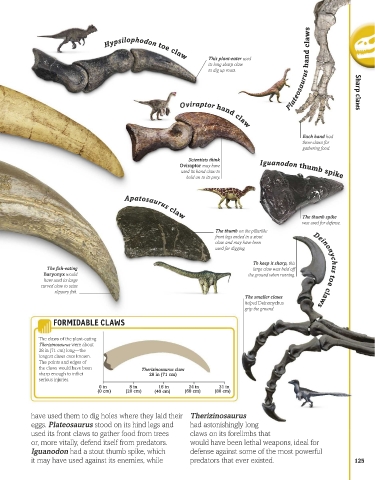
Plateosaurus hand claws


                                   Hypsilophodon toe claw
                                                                     This plant-eater used
                                                                     its long sharp claw
                                                                     to dig up roots.                                Sharp claws


                                                            Oviraptor hand claw
                                                                                                    Each hand had
                                                                                                    three claws for
                                                                                                    gathering food.
                                                               Scientists think
                                                            Oviraptor may have        Iguanodon thumb spike
                                                            used its hand claw to
                                                              hold on to its prey.


                                          Apatosaurus claw
                                                                                                    The thumb spike
                                                                                                    was used for defense.
                                                                       The thumb on the pillarlike
                                                                       front legs ended in a stout
                                                                       claw and may have been
                                                                       used for digging.

                                                                                    To keep it sharp, this
                The fish-eating                                                     large claw was held off
               Baryonyx would                                                     the ground when running.   Deinonychus toe claws
               have used its large
              curved claw to seize
                   slippery fish.
                                                                                 The smaller claws
                                                                                 helped Deinonychus
                                                                                 grip the ground.

                  FORMIDABLE CLAWS

              The claws of the plant-eating
              Therizinosaurus were about
              28 in (71 cm) long—the
              longest claws ever known.
              The points and edges of
              the claws would have been        Therizinosaurus claw
              sharp enough to inflict             28 in (71 cm)
              serious injuries.
                                 0 in      8 in      16 in     24 in     31 in
                                 (0 cm)   (20 cm)  (40 cm)   (60 cm)   (80 cm)


           have used them to dig holes where they laid their  Therizinosaurus
           eggs. Plateosaurus stood on its hind legs and       had astonishingly long
           used its front claws to gather food from trees      claws on its forelimbs that
           or, more vitally, defend itself from predators.     would have been lethal weapons, ideal for
           Iguanodon had a stout thumb spike, which            defense against some of the most powerful
           it may have used against its enemies, while         predators that ever existed.                          125
                                                                                                                     125


   US_124-125_Sharp_claws.indd   125                                                                             10/04/18   3:34 PM

