


Page 180 - The Dinosaur Book and Other Wonders of the Prehistoric World (DK-Smithsonian)
P. 180
Body cover


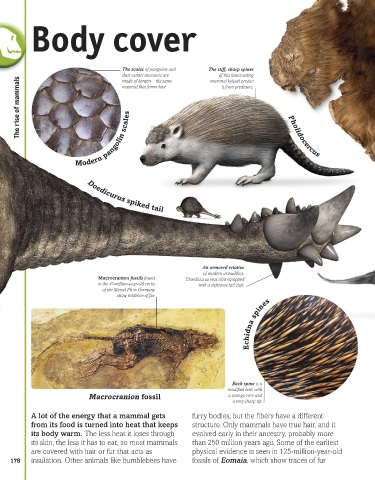
                                         The scales of pangolins and   The stiff, sharp spines
                                         their extinct ancestors are   mammal helped protect
                                                                        of this insect-eating
       The rise of mammals  Modern pangolin scales                                             Pholidocercus
                                         made of keratin—the same
                                         material that forms hair.
                                                                          it from predators.


                              Doedicurus spiked tail


                                                                   An armored relative
                                                                   of modern armadillos,
                                 Macrocranion fossils found   Doedicurus was also equipped
                                 in the 47-million-year-old rocks   with a defensive tail club.
                                  of the Messel Pit in Germany
                                       show evidence of fur.
                                                                                  Echidna spines


                                                                             Each spine is a
                                                                           modified hair, with
                              Macrocranion fossil                           a spongy core and
                                                                             a very sharp tip.

           A lot of the energy that a mammal gets               furry bodies, but the fibers have a different
           from its food is turned into heat that keeps         structure. Only mammals have true hair, and it
           its body warm. The less heat it loses through        evolved early in their ancestry, probably more
           its skin, the less it has to eat, so most mammals    than 250 million years ago. Some of the earliest
           are covered with hair or fur that acts as            physical evidence is seen in 125-million-year-old
    178    insulation. Other animals like bumblebees have       fossils of Eomaia, which show traces of fur


   US_178-179_Body_cover.indd   178                                                                              26/04/18   3:30 PM

