


Page 86 - The Dinosaur Book and Other Wonders of the Prehistoric World (DK-Smithsonian)
P. 86
Iguanodontians


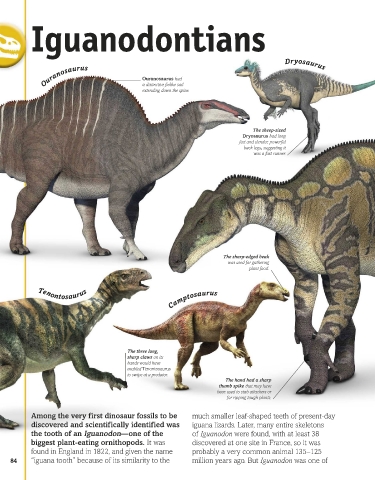
               Ouranosaurus                    Ouranosaurus had                               Dryosaurus


                                               a distinctive finlike sail
                                               extending down the spine.


                                                                                    The sheep-sized
                                                                                Dryosaurus had long
                                                                               feet and slender, powerful
                                                                                 back legs, suggesting it
                                                                                    was a fast runner.


                                                                          The sharp-edged beak
                                                                           was used for gathering
                                                                                  plant food.


             Tenontosaurus
                                                         Camptosaurus


                                           The three long,
                                           sharp claws on its
                                           hands would have
                                           enabled Tenontosaurus
                                           to swipe at a predator.
                                                                           The hand had a sharp
                                                                         thumb spike that may have
                                                                        been used to stab attackers or
                                                                           for ripping tough plants.


           Among the very first dinosaur fossils to be          much smaller leaf-shaped teeth of present-day
           discovered and scientifically identified was         iguana lizards. Later, many entire skeletons
           the tooth of an Iguanodon—one of the                 of Iguanodon were found, with at least 38
           biggest plant-eating ornithopods. It was             discovered at one site in France, so it was
           found in England in 1822, and given the name         probably a very common animal 135–125
    84     “iguana tooth” because of its similarity to the      million years ago. But Iguanodon was one of


   US_084-085_Iguanodontians.indd   84                                                                           10/04/18   3:33 PM

