


Page 89 - The Dinosaur Book and Other Wonders of the Prehistoric World (DK-Smithsonian)
P. 89
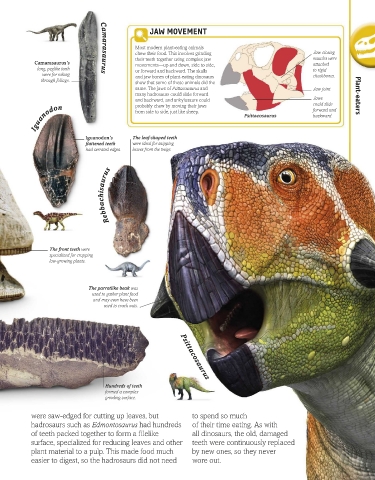
JAW MOVEMENT


                                             Most modern plant-eating animals
                                             chew their food. This involves grinding                   Jaw closing
                                             their teeth together using complex jaw                    muscles were
            Camarasaurus’s                   movements—up and down, side to side,                      attached
             long, peglike teeth             or forward and backward. The skulls                       to rigid
               were for raking               and jaw bones of plant-eating dinosaurs                   cheekbones.
                                  Camarasaurus
              through foliage.
                                             show that some of these animals did the
                                             same. The jaws of Psittacosaurus and                      Jaw joint
                                             many hadrosaurs could slide forward                                     Plant-eaters
                                             and backward, and ankylosaurs could                       Jaws
                                                                                                       could slide
             Iguanodon                       from side to side, just like sheep.  Psittacosaurus       forward and
                                             probably chew by moving their jaws
                                                                                                       backward.

                             Iguanodon’s    The leaf-shaped teeth
                             flattened teeth   were ideal for snipping
                             had serrated edges.  leaves from the twigs.


                                     Rebbachisaurus


                 The front teeth were
                 specialized for cropping
                 low-growing plants.


                              The parrotlike beak was
                               used to gather plant food
                               and may even have been
                                   used to crack nuts.


                                   Hundreds of teeth        Psittacosaurus
                                   formed a complex
                                   grinding surface.


           were saw-edged for cutting up leaves, but            to spend so much
           hadrosaurs such as Edmontosaurus had hundreds        of their time eating. As with
           of teeth packed together to form a filelike          all dinosaurs, the old, damaged
           surface, specialized for reducing leaves and other   teeth were continuously replaced
           plant material to a pulp. This made food much        by new ones, so they never
           easier to digest, so the hadrosaurs did not need     wore out.


   US_086-087_Plant_eaters.indd   87                                                                             10/04/18   3:33 PM

