


Page 249 - (DK Eyewitness) Travel Guide - Spain
P. 249
EASTERN SP AIN 247
VALENCIA AND MURCIA
Castellón • Valencia • Alicante • Murcia
Centuries ago, Muslim settlers planted up the central
region of Spain’s eastern Mediterranean coast, and the
fertile fields and citrus groves of the coastal plains are still
the country’s market garden today. This region of Spain’s
eastern Mediterranean coast is also an attractive holiday
destination – the beaches of the Costa Blanca, the Costa del
Azahar and the Costa Cálida draw millions of tourists annually.
These productive lands have been have been joined by modern pack age
occupied for over 50,000 years. The holiday resorts, such as Benidorm and
Greeks, Phoenicians, Carthaginians and La Manga del Mar Menor. Inland, where
Romans all settled here before the Moors tourism has barely reached, the landscape
arrived, trading fish and local produce. rises into the chains of mountains that
The provinces of Castellón, Valencia stand between the coast and the plateau
and Alicante (which make up the of Central Spain. The scenery here ranges
Comunidad Valenciana) were recon from picturesque valleys and hills in the
quered from the Moors by a Catalan Maestrat, in the north of Castellón, to
army. The language these troops left the semidesert terrain around Lorca in
behind them developed into a dialect, southern Murcia.
Valenciano, which is widely spoken and The warm climate encourages out door
increasingly seen on signposts. Murcia, life and exuberant fiestas. Most famous
to the south, is one of Spain’s smallest of these are Las Fallas of Valencia; the
autonomous regions. mock battles between Moors and
The population is concentrated on Christians staged in Alcoi; and the lavish,
the coast where the historic towns and costumed Easter processions in Murcia
cities of Valencia, Alicante and Cartagena and Lorca.
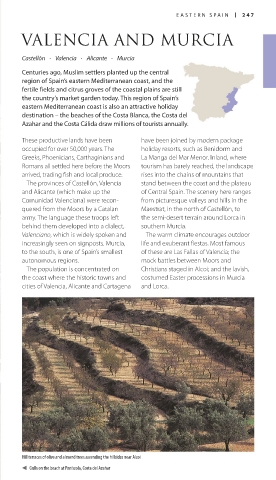
Hill terraces of olive and almond trees ascending the hillsides near Alcoi
Gulls on the beach at Peníscola, Costa del Azahar
246-247_EW_Spain.indd 247 26/09/17 11:01 am

