


Page 55 - (DK Eyewitness) Travel Guide - Spain
P. 55
THE HIST OR Y OF SP AIN 53
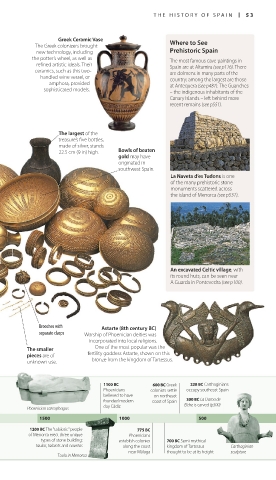
Greek Ceramic Vase
The Greek colonizers brought Where to See
new technology, including Prehistoric Spain
the potter’s wheel, as well as The most famous cave paintings in
refined artistic ideals. Their Spain are at Altamira (see p116). There
ceramics, such as this two- are dolmens in many parts of the
handled wine vessel, or country; among the largest are those
amphora, provided at Antequera (see p481). The Guanches
sophisticated models. – the indigenous inhabitants of the
Canary Islands – left behind more
recent remains (see p551).
The largest of the
treasure’s five bottles,
made of silver, stands
22.5 cm (9 in) high. Bowls of beaten
gold may have
originated in
southwest Spain.
La Naveta d’es Tudons is one
of the many prehistoric stone
monuments scattered across
the island of Menorca (see p531).
An excavated Celtic village, with
its round huts, can be seen near
A Guarda in Pontevedra (see p100).
Brooches with Astarte (8th century BC)
separate clasps Worship of Phoenician deities was
incorporated into local religions.
The smaller One of the most popular was the
pieces are of fertility goddess Astarte, shown on this
unknown use. bronze from the kingdom of Tartessus.
1100 BC 600 BC Greek 228 BC Carthaginians
Phoenicians colonists settle occupy south east Spain
believed to have on northeast
founded modern- coast of Spain 300 BC La Dama de
Phoenician sarcophagus day Cádiz Elche is carved (p300)
1500 1000 500
1200 BC The “talaiotic” people 775 BC
of Menorca erect three unique Phoenicians
types of stone building: establish colonies 700 BC Semi-mythical
taulas, talaiots and navetas along the coast kingdom of Tartessus Carthaginian
near Málaga thought to be at its height sculpture
Taula in Menorca
052-053_EW_Spain.indd 53 26/09/17 11:52 am

