


Page 583 - (DK Eyewitness) Travel Guide - Spain
P. 583
WHERE T O EA T AND DRINK 581
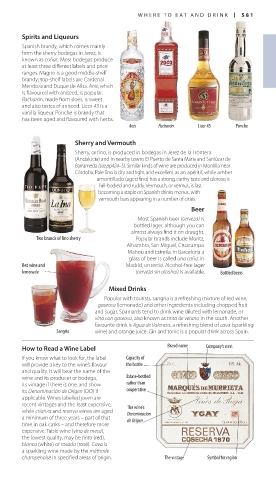
Spirits and Liqueurs
Spanish brandy, which comes mainly
from the sherry bodegas in Jerez, is
known as coñac. Most bodegas pro duce
at least three different labels and price
ranges. Magno is a good middle-shelf
brandy; top-shelf labels are Cardenal
Mendoza and Duque de Alba. Anís, which
is flavoured with aniseed, is popular.
Pacharán, made from sloes, is sweet
and also tastes of aniseed. Licor 43 is a
vanilla liqueur. Ponche is brandy that
has been aged and flavoured with herbs.
Anís Pacharán Licor 43 Ponche
Sherry and Vermouth
Sherry, or fino, is produced in bodegas in Jerez de la Frontera
(Andalucía) and in nearby towns El Puerto de Santa María and Sanlúcar de
Barrameda (see pp424–5). Similar kinds of wine are pro duced in Montilla near
Córdoba. Pale fino is dry and light and excel lent as an apéritif, while amber
amontillado (aged fino) has a strong, earthy taste and oloroso is
full-bodied and ruddy. Vermouth, or vermut, is fast
becoming a staple on Spanish drinks menus, with
vermouth bars appearing in a number of cities.
Beer
Most Spanish beer (cerveza) is
bottled lager, although you can
almost always find it on draught.
Two brands of fino sherry Popular brands include Moritz,
Alhambra, San Miguel, Cruzcampo
Mahou and Estrella. In Barcelona a
glass of beer is called una caña; in
Red wine and Madrid, un tercio. Alcohol-free lager
lemonade (cerveza sin alco hol) is available. Bottled beers
Mixed Drinks
Popular with tourists, sangria is a refreshing mix ture of red wine,
gaseosa (lemonade) and other ingre dients including chopped fruit
and sugar. Spaniards tend to drink wine diluted with lemon ade, or
vino con gaseosa, also known as tinto de verano in the south. Another
favourite drink is Agua de Valencia, a refreshing blend of cava (sparkling
Sangria wine) and orange juice. Gin and tonic is a popular drink across Spain.
How to Read a Wine Label Brand name Company’s crest
If you know what to look for, the label Capacity of
will provide a key to the wine’s flavour the bottle
and quality. It will bear the name of the
wine and its producer or bodega, Estate-bottled
its vintage if there is one, and show rather than
its Denominación de Origen (DO) if cooperative
applicable. Wines labelled joven are
recent vintages and the least expensive, The wine’s
while crianza and reserva wines are aged Denominación
a minimum of three years – part of that de Origen
time in oak casks – and therefore more
expensive. Table wine (vino de mesa),
the lowest quality, may be tinto (red),
blanco (white) or rosado (rosé). Cava is
a sparkling wine made by the méthode
champenoise in specified areas of origin. The vintage Symbol for region
580-581_EW_Spain.indd 581 26/09/17 11:03 am

