


Page 608 - (DK Eyewitness) Travel Guide - Spain
P. 608
606 TR A VELLERS ’ NEEDS
SHOPPING IN SPAIN
Spain has a thriving shopping culture, with comes to shopping. In small shops, most
many unique, family-run boutiques as well merchandise is behind the counter, and the
as reliable chain stores and big department clerk will retrieve whatever you need, making
stores. Good buys include leather, fashion, for a time-consuming, but friendly, way to
wine and ceramics, though these days it is shop. It is polite to greet the shop owner and
possible to find anything you are looking for, fellow shop pers with a “buenos días” or
from traditional gifts to designer clothes. “buenas tardes” as you enter, and to say
Spain has its own rules of etiquette when it “adiós” as you leave.
VAT In addition to these two rebajas
Value added tax (VAT), known periods, shops can also offer
as IVA in Spanish, is included in sales at any time of year.
the price of nearly every thing
in Spain. However, non-EU
residents are eligible for a VAT Markets
refund (see p616). If you buy A visit to a Spanish market is a
goods worth a total of €90.15 or great lesson in local culture.
more, request a VAT refund form Every town, large or small, has at
from the shop keeper, then get it least one fresh market, known as
stamped at a Spanish customs mercadillo, where you can buy
office before you check your local produce, Spanish cheeses
bags in at the airport. Present and sausages and other foods.
the stamped form at an affiliated Markets in the cities follow
bank or office in the airport, or regular store opening hours, but
mail it for the refund to be in smaller towns they may only
credited to your credit card. be open in the morning, or on
certain days of the week.
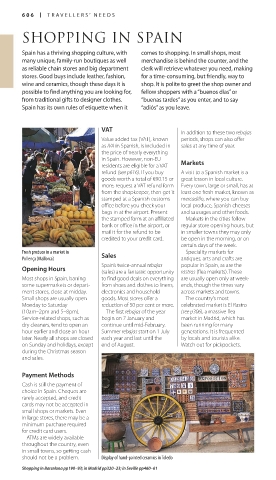
Fresh produce in a market in Speciality markets for
Pollença (Mallorca) Sales antiques, arts and crafts are
Spain’s twice-annual rebajas popular in Spain, as are the
Opening Hours
(sales) are a fantastic oppor tunity rastros (flea markets). These
Most shops in Spain, barring to find good deals on everything are usually open only at week-
some supermarkets or depart- from shoes and clothes to linens, ends, though the times vary
ment stores, close at midday. electronics and household across markets and towns.
Small shops are usually open goods. Most stores offer a The country’s most
Monday to Saturday reduction of 50 per cent or more. cele brated market is El Rastro
(10am–2pm and 5–8pm). The first rebajas of the year (see p306), a massive flea
Service-related shops, such as begin on 7 January and market in Madrid, which has
dry cleaners, tend to open an continue until mid-February. been running for many
hour earlier and close an hour Summer rebajas start on 1 July gener ations. It is frequented
later. Nearly all shops are closed each year and last until the by locals and tourists alike.
on Sunday and holidays, except end of August. Watch out for pickpockets.
during the Christmas season
and sales.
Payment Methods
Cash is still the payment of
choice in Spain. Cheques are
rarely accepted, and credit
cards may not be accepted in
small shops or markets. Even
in large stores, there may be a
minimum purchase required
for credit card users.
ATMs are widely available
throughout the country, even
in small towns, so getting cash
should not be a problem. Display of hand-painted ceramics in Toledo
Shopping in Barcelona pp190–93; in Madrid pp320–23; in Seville pp460–61
606-607_EW_Spain.indd 606 26/09/17 11:03 am
Eyewitness Travel LAYERS PRINTED:
Practical template “UK” LAYER
(Source v1.6)
Date 7th January 2013
Size 125mm x 217mm

