


Page 610 - (DK Eyewitness) Travel Guide - Spain
P. 610
608 SP AIN
ENTERTAINMENT IN SPAIN
Spain is famous for its vibrant, colourful matches, to live flamenco and highbrow
culture – wherever you are, there is usually cultural events. Although Madrid, Barcelona
a fiesta going on somewhere nearby, or and, to a lesser extent, Seville have the
some impromptu celebration taking place widest selection of programmes, the other
in the street. So, while there’s usually no regional capitals are not far behind. The
need to seek out formal entertainment, coastal resorts also witness a lot of action in
those who do want to plan a day or night the summer months. Regular annual events
out will find plenty of choice, ranging from in various parts of Spain are detailed on
raucous cabarets and gripping sporting pages 42–3.
the Spanish music scene is also flamenco that even purists
enriched by influences from admire, try the smaller venues
South America and Africa. or catch a performance during
The Benicassim festival in July an Andalucían fiesta, particularly
and the Sonar festival in June in in the provinces of Seville
Barcelona are the preferred live and Jerez.
events for those in search of new Córdoba hosts the National
music. An international blues fes Flamenco Competition in
tival is held every July in Cazorla November every third year.
(see p45), with big international The next two are being held
jazz artists playing in small town in 2019 and 2022.
stadiums and even bullrings.
The Spanish music channel Classical Music, Opera
RNE 3 broadcasts an eclectic
selection of Spanish as well and Ballet
as international music. Opera, classical music and ballet
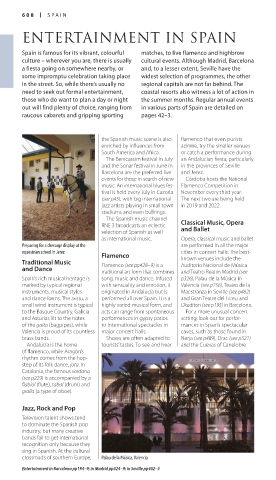
Preparing for a dressage display at the are performed in all the major
equestrian school in Jerez cities in concert halls. The best
Flamenco
Traditional Music Flamenco (see pp428–9) is a known venues include the
Auditorio Nacional de Música
and Dance
traditional art form that combines and Teatro Real in Madrid (see
Spain’s rich musical heritage is song, music and dance. Infused p326), Palau de la Música in
marked by typical regional with sensuality and emotion, it Valencia (see p256), Teatro de la
instruments, musical styles originated in Andalucía but is Mae stranza in Seville (see p462)
and dance forms. The txistu, a performed all over Spain. It is a and Gran Teatre del Liceu and
small wind instrument is typical highly varied musical form, and L’Audi tori (see p195) in Barcelona.
to the Basque Country, Galicia acts can range from spontaneous For a more unusual concert
and Asturias lilt to the notes performances in gypsy patios setting, look out for perfor
of the gaita (bagpipes), while to international spectacles in mances in Spain’s spectacular
Valencia is proud of its countless major concert halls. caves, such as those found in
brass bands. Shows are often adapted to Nerja (see p489), Drac (see p521)
Andalucía is the home tourists’ tastes. To see and hear and the Cuevas of Canelobre
of flamenco, while Aragón’s
rhythm comes from the hop
step of its folk dance, jota. In
Catalonia, the famous sardana
(see p229) is accompanied by a
flabiol (flute), tabal (drum) and
gralla (a type of oboe).
Jazz, Rock and Pop
Television talent shows tend
to dominate the Spanish pop
indus try, but many creative
bands fail to get international
recog nition only because they
sing in Spanish. At the cultural
crossroads of southern Europe, Palau de la Música, Valencia
Entertainment in Barcelona pp194–9; in Madrid pp324–9; in Seville pp462–3
608-609_EW_Spain.indd 608 26/09/17 11:56 am

