


Page 367 - (DK) Smithsinian - Military History: The Definitive Visual Guide to the Objects of Warfare
P. 367
365


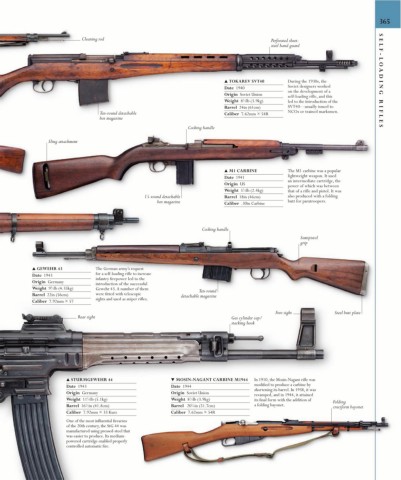
                              Cleaning rod                                                        Perforated sheet-
                                                                                                  steel hand guard                      SELF-LO


                                                                                 ▲ TOKAREV SVT40        During the 1930s, the
                                                                                 Date  1940             Soviet designers worked
                                                                                                        on the development of a
                                                                                 Origin  Soviet Union
                                                                                                        self-loading rifle, and this    ADING RIFLES
                                                                                        1
                                                                                 Weight  8 ⁄2lb (3.9kg)  led to the introduction of the
                                                                                 Barrel  24in (61cm)    SVT40—usually issued to
                                    Ten-round detachable                         Caliber  7.62mm × 54R  NCOs or trained marksmen.
                                    box magazine
                                                                    Cocking handle

                  Sling attachment


                                                                                 ▲ M1 CARBINE           The M1 carbine was a popular
                                                                                 Date  1941             lightweight weapon. It used
                                                                                                        an intermediate cartridge, the
                                                                                 Origin  US             power of which was between
                                                                                        1
                                                                                 Weight  5 ⁄4lb (2.4kg)  that of a rifle and pistol. It was
                                                    15-round detachable          Barrel  18in (46cm)    also produced with a folding
                                                         box magazine            Caliber  .30in Carbine  butt for paratroopers.


                                                                         Cocking handle
                                                                                                            Semipistol
                                                                                                            grip


            ▲ GEWEHR 43            The German army’s request
            Date  1943             for a self-loading rifle to increase
                                   infantry firepower led to the
            Origin  Germany
                                   introduction of the successful
                   1
            Weight  9 ⁄2lb (4.35kg)  Gewehr 43. A number of them        Ten-round
            Barrel  22in (56cm)    were fitted with telescopic    detachable magazine
                                   sights and used as sniper rifles.
            Caliber  7.92mm × 57
                                                                                                   Fore sight           Steel butt plate
                             Rear sight                                            Gas cylinder cap/
                                                                                   stacking hook


                         ▲ STURMGEWEHR 44                     ▼ MOSIN-NAGANT CARBINE M1944  In 1910, the Mosin-Nagant rifle was
                         Date  1943                           Date  1944                    modified to produce a carbine by
                                                                                            shortening its barrel. In 1938, it was
                         Origin  Germany                      Origin  Soviet Union
                                                                                            revamped, and in 1944, it attained
                         Weight  11 ⁄4lb (5.1kg)              Weight  8 ⁄2lb (3.9kg)        its final form with the addition of    Folding
                                1
                                                                     1
                               1
                                                                     1
                         Barrel  16 ⁄2in (41.8cm)             Barrel   20 ⁄4in (51.7cm)     a folding bayonet.          cruciform bayonet
                         Caliber  7.92mm × 33 Kurz            Caliber  7.62mm × 54R
                         One of the most influential firearms
                         of the 20th century, the StG 44 was
                         manufactured using pressed-steel that
                         was easier to produce. Its medium-
                         powered cartridge enabled properly
                         controlled automatic fire.

