


Page 726 - (DK Eyewitness) Travel Guide - India
P. 726
724 TR A VELLERS ’ NEEDS
ENTERTAINMENT
Entertainment in India offers fascinating response to local conditions, the land
insights into the religious, cultural and social and community. Today, the choice of
diversity of the country. The vast tradition of entertainment includes classical dance and
performing arts is an ancient one, inextricably music, religious dance-dramas, contemporary
linked to religion and mythology. Initially, theatre and colourful temple festivals. There
classical music and dance were performed are popular alternatives as well, especially
as part of temple ritual, while the rich cinemas, where the latest Bollywood and
repertoire of folk forms emerged as a Hollywood blockbusters are shown.
Sources of Information in the larger cities also
Local newspapers and magazines have ticket coun ters;
are good sources of information, event organizers will
as they carry regular listings and indicate where these are
advertisements of events. Often, in the local newspapers.
hotels have in-house publications Hotels or tour operators
highlighting the city’s sights as can often arrange tickets
well as its entertainment venues as well. In cities, online
and programmes. If not, the ticket-booking options
travel desk can usually provide for plays and movies are
the necessary information. available on sites such as
In addition, the India Tourism bookmyshow.com.
offices and website (see p735)
publish an annual calendar of Classical Music
events. Good travel agents can
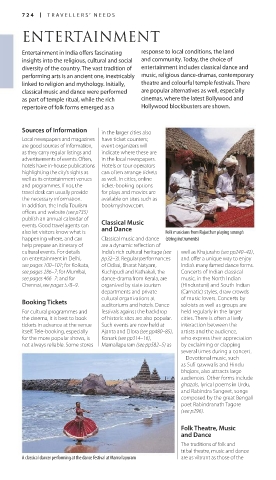
also let visitors know what is and Dance Folk musicians from Rajasthan playing sarangis
happening where, and can Classical music and dance (string instruments)
help prepare an itinerary of are a dynamic reflection of
cultural events. For details India’s rich cultural heritage (see well as Khajuraho (see pp240–42),
on entertainment in Delhi, pp32–3). Regular performances and offer a unique way to enjoy
see pages 100–101; for Kolkata, of Odissi, Bharat Natyam, India’s many famed dance forms.
see pages 286–7; for Mumbai, Kuchipudi and Kathakali, the Concerts of Indian classical
see pages 466–7; and for dance-drama from Kerala, are music, in the North Indian
Chennai, see pages 578–9. organized by state tourism (Hindustani) and South Indian
departments and private (Carnatic) styles, draw crowds
cultural organizations at of music lovers. Concerts by
Booking Tickets auditoriums and hotels. Dance soloists as well as groups are
For cultural programmes and festivals against the backdrop held regularly in the larger
the cinema, it is best to book of historic sites are also popular. cities. There is often a lively
tickets in advance at the venue Such events are now held at interaction between the
itself. Tele-booking, especially Ajanta and Ellora (see pp480–85), artists and the audience,
for the more popular shows, is Konark (see pp314–16), who express their appreciation
not always reliable. Some stores Mamallapuram (see pp582–5) as by exclaiming or clapping
several times during a concert.
Devotional music, such
as Sufi qawwalis and Hindu
bhajans, also attracts large
audiences. Other forms include
ghazals, lyrical poems in Urdu,
and Rabindra Sangeet, songs
composed by the great Bengali
poet Rabindranath Tagore
(see p296).
Folk Theatre, Music
and Dance
The traditions of folk and
tribal theatre, music and dance
A classical dancer performing at the dance festival at Mamallapuram are as vibrant as those of the
724-725_EW_India.indd 724 26/04/17 11:55 am

