


Page 133 - (DK Eyewitness) Travel Guide: Japan
P. 133
JAP AN A T A GLANCE 131
Wakkanai
HOKKAIDO
(see pp284–95)
Sapporo
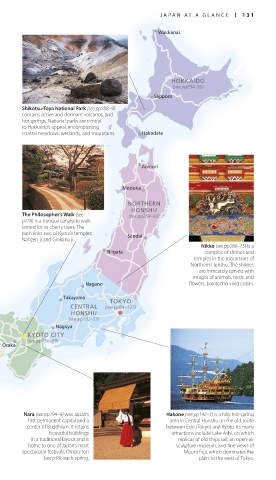
Shikotsu-Toya National Park (see pp288–9)
contains active and dormant volcanos, and
hot springs. National parks are central
to Hokkaido’s appeal, encompassing
coastal meadows, wetlands, and mountains. Hakodate
Aomori
Morioka
NORTHERN
HONSHU
The Philosopher’s Walk (see (see pp264–83)
p174) is a tranquil canalside walk
famed for its cherry trees. The
path links two of Kyoto’s temples: Sendai
Nanzen-ji and Ginkaku-ji.
Nikko (see pp268–75) is a
Niigata complex of shrines and
temples in the mountains of
Northern Honshu. The shrines
are intricately carved with
images of animals, birds, and
Nagano flowers, painted in vivid colors.
Takayama
TOKYO
CENTRAL (see pp64–127)
HONSHU
(see pp132–57)
WESTERN Nagoya
HONSHU
(see pp190–223) KYOTO CITY
(see pp158–89)
Hiroshima Osaka
Fukuoka SHIKOKU
(see pp224–33)
KYUSHU
Nagasaki (see pp234–53)
Nara (see pp194–9) was Japan’s Hakone (see pp142–3) is a hilly hot-spring
Kagoshima first permanent capital and a area in Central Honshu on the old route
center of Buddhism. It retains between Edo (Tokyo) and Kyoto. Its many
beautiful buildings attractions include Lake Ashi, on which
in a traditional layout and is replicas of old ships sail; an open-air
home to one of Japan’s most sculpture museum; and fine views of
spectacular festivals, Omizu-tori Mount Fuji, which dominates the
(see p46), each spring. plain to the west of Tokyo.
130-131_EW_Japan.indd 131 08/08/16 3:06 pm

