


Page 358 - (DK Eyewitness) Travel Guide: Japan
P. 358
356 TR A VELERS ’ NEEDS
Colorpuncture uses colored yamabushi (moun tain priests),
light to restore well-being. still practice in the Dewa
The Japanese Homeopathic Sanzan mountains in Northern
Medical Association is the Honshu (see p278). During the
governing body for homeo- Edo period, Mount Fuji (see
pathy practi tioners in the pp144–5) became a similar
country. Lifeforces offers a object of worship. Even today,
range of holistic, complemen- among the thousands of
tary ther apies including reiki, tourists who climb every
a form of energy healing orig- summer, aged white-clad
inally developed in Japan, and pilgrims (henro) wearing conical
sekhem, an ancient Egyptian straw hats can be seen.
form of energy healing. They The most famous and
also run a free reiki share demanding route is the
group, where participants can 88-Temple Pilgrimage on
Illustration of traditional acupuncture exchange energy, every second Shikoku (see pp232–3). The
points on the body and fourth Sunday of the Western Japan 33 Kannon
month. The same organizers Temple Circuit involves visiting
Traditional Medicine run Circle of Light, which holds a temples to Kannon, the
In the Meiji period, with its discussion group on the third goddess of mercy (see p33),
emphasis on all things foreign, Sunday of each month to in Western Honshu. It
it became fashionable in Japan introduce their healing includes temples in
to reject traditional healing arts to a wider audience. Kyoto, Nara, Ise, and
methods and instead to Mount Koya. There is
embrace Western science and a shorter route for
medicine. Today, as alternative Pilgrimage Routes pilgrims in Kamakura
medicine, including Eastern For many centuries (see pp138–41),
methods, is burgeon ing in pilgrimages pro- starting a brief bus
popularity in the West, the vided Japanese ride away from the
trend in Japan is also toward farmers and towns- main station and
a blend of ancient and people with a reason finishing at the
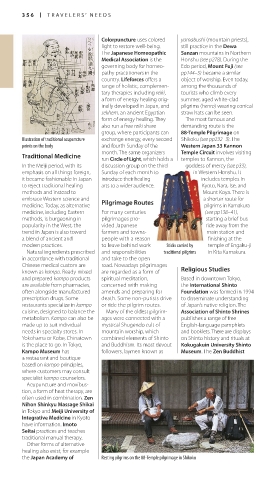
modern practices. to leave behind work Sticks carried by temple of Engaku-ji
Natural ingredients pre scribed and responsi bilities traditional pilgrims in Kita Kamakura.
in accordance with traditional and take to the open
Chinese medical custom are road. Now adays pilgrimages
known as kampo. Ready-mixed are regarded as a form of Religious Studies
and prepared kampo products spiritual meditation, Based in downtown Tokyo,
are available from pharmacies, concerned with making the International Shinto
often along side manufactured amends and preparing for Foundation was formed in 1994
prescrip tion drugs. Some death. Some non-purists drive to disseminate under standing
restaurants specialize in kampo or ride the pilgrim routes. of Japan’s native religion. The
cuisine, designed to balance the Many of the oldest pilgrim- Association of Shinto Shrines
meta bolism. Kampo can also be ages were connected with a publishes a range of free
made up to suit individual mystical Shugendo cult of English-language pamphlets
needs in specialty stores. In mountain worship, which and booklets. There are displays
Yokohama or Kobe, China town combined elements of Shinto on Shinto history and rituals at
is the place to go. In Tokyo, and Buddhism. Its most devout Kokugakuin University Shinto
Kampo Museum has followers, laymen known as Museum. The Zen Buddhist
a restaurant and boutique
based on kampo principles,
where customers may consult
specialist kampo counselors.
Acupuncture and moxibus-
tion, a form of heat therapy, are
often used in combina tion. Zen
Nihon Shinkyu Massage Shikai
in Tokyo and Meiji University of
Integrative Medicine in Kyoto
have information. Imoto
Seitai practices and teaches
traditional manual therapy.
Other forms of alternative
healing also exist, for example
the Japan Academy of Resting pilgrims on the 88-Temple pilgrimage in Shikoku
356-357_EW_Japan.indd 356 08/08/16 3:09 pm
Eyewitness Travel LAYERS PRINTED:
Practical template “UK” LAYER
(Source v1.7)
Date 5th March 2013
Size 125mm x 217mm

