


Page 92 - (DK Eyewitness) Travel Guide: Japan
P. 92
90 T OK Y O AREA B Y AREA
8 Senso-ji Temple
Sensoji Temple
Popularly known as Asakusa Kannon, this is Tokyo’s most sacred and
spectacular temple. In AD 628, two fishermen fished a small gold
statue of Kannon, the Buddhist goddess of mercy, from the Sumida
River. Their master built a shrine to Kannon, then in 645, the holy man
Shokai built a temple to her. Its fame, wealth, and size grew until
Tokugawa Ieyasu bestowed upon it a large stipend of land. The
Yoshiwara pleasure quarter moved nearby in 1657 only increas ing
its popularity. The temple survived the 1923 earth quake but not
World War II bombing. Its main buildings are therefore relative ly
new, but follow the Edo-era layout. Although the buildings are
impressive, it is the people following their daily rituals that
make this place so special.
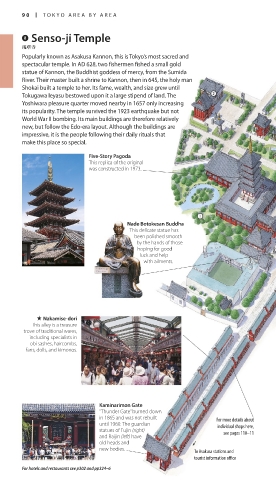
Five-Story Pagoda
This replica of the original
was con structed in 1973.
Nade Botokesan Buddha
This delicate statue has
been polished smooth
by the hands of those
hoping for good
luck and help
with ailments.
. Nakamise-dori
This alley is a treasure
trove of traditional wares,
including specialists in
obi sashes, haircombs,
fans, dolls, and kimonos.
Kaminarimon Gate
“Thunder Gate” burned down
in 1865 and was not rebuilt For more details about
until 1960. The guardian individual shops here,
statues of Fujin (right) see pages 110–11
and Raijin (left) have
old heads and
new bodies.
To Asakusa stations and
tourist information office
For hotels and restaurants see p302 and pp324–6
090-091_EW_Japan.indd 90 08/08/16 3:06 pm
Eyewitness Travel LAYERS PRINTED:
Starsight template “UK” LAYER
(Source v2.7)
Date 24th April 2013
Size 125mm x 217mm

