


Page 90 - (DK Eyewitness) Travel Guide: Japan
P. 90
88 T OK Y O AREA B Y AREA
3 Shitamachi
Museum is the Asakura Museum of
Sculpture, home of sculptor
Fumio Asakura (1883–1964). On
the second floor is a delightful
2-1 Ueno-koen, Taito-ku. Map 3 C3. room full of his small statues of
Tel (03) 3823-7451. Ueno stn,
Hibiya & Ginza lines. £ Keisei-Ueno one of his favorite subjects –
stn, Keisei line; Ueno stn, many lines. cats – but the garden is the real
Open 9:30am–4:30pm Tue–Sun. & highlight with a trad itional
composition of water and stone.
This museum is dedicated to Sansaki-zaka, the area’s main
preserving the spirit and artifacts street, has some traditional
of Shitamachi (see p81). The shops. The understated Daimyo
50,000 exhibits include Clock Museum has 100 Edo-era
recreations of Edo-era shops, clocks lovingly presented.
traditional toys, tools, and
photographs, all donated 5 Ameyoko Market Shopping for a bargain at
by Shitamachi residents. Ameyoko Market
Ameyoko Market
4 Yanaka District Map 3 C3. Ueno stn, Hibiya & 6 Inaricho District
Ginza lines; Ueno-Okachimachi stn,
Yanaka District and Kappabashi-
Oedo line. £ Okachimachi stn,
Yamanote line; Ueno stn, many lines. dori
Map 3 C1. £ Nippori stn, many
lines. Asakura Museum of Sculpture: One of the great bazaars in Asia, Inaricho District and Kappabashi-dori
Tel (03) 3821-4549. Open 9:30am– Ameyoko is a place where Map 4 D3, 4 E2–3. Inaricho &
4:30pm Tue–Wed, Fri–Sun. & Daimyo almost anything is available, Tawaramachi stns, Ginza line.
Clock Museum: Tel (03) 3821-6913. almost always at a discount. In
Open Jan 15–Jun 30, Oct 1–Dec 24:
10am–4pm Tue–Sun. & Edo times, this was the place to Inaricho is the Tokyo head-
come and buy ame (candy). quarters for wholesale religious
This quiet area is rewarding After World War II black-market goods. Small wooden boxes to
to wander through because it goods, such as liquor, cigarettes, hold Buddhas and family photos,
survived the 1923 earthquake chocolates, and nylons started paper lanterns, bouquets of
and bombing of World War II. It appearing here, and ame brass flowers (jouka), Shinto
preserves something of the feel acquired its second meaning as household shrines, and even
of old Shitamachi with tightly an abbreviation for American prayer beads can be found here.
packed houses in narrow alleys, (yoko means “alley”). An area Kappabashi-dori, named after
and traditional food stalls of tiny shops packed under the the mythical water imp (kappa)
selling rice crackers and old- elevated train tracks, Ameyoko is who supposedly helped built a
fashioned candy. no longer a black market, but still bridge (bashi) here, is Tokyo’s
The large Yanaka Cemetery the place for bargain foreign center for kitchenware and
is a must-see in cherry-blossom brands, including Chanel and the source of the plastic food
season. Inside is Tenno-ji, a Rolex. Clothes and accessories displayed in almost every
temple with a large bronze are concentrated under the restaurant window. Although the
Buddha dating from 1690. tracks, while foods, including a “food” is for sale, prices are much
Nearby are tea shops and huge range of seafood, line the higher than for the real thing.
florists. To the west of Tenno-ji street that follows the tracks.
7 Tokyo Skytree
東京スカイツリー
1-1-2 Oshiage, Sumida. Map off 4 F3.
Tel 0570-55-0634. £ Tokyo
Skytree stn & Oshiage stn, Tobu line.
Open 8am–10pm. &
At 634 m (2,080 ft), this is the
tallest building in Japan. While its
main function is broad casting, it
also hosts a large mall, aquarium,
planetarium, and restaurants. The
Tembo Deck, at 350 m (1,150 ft)
above ground level, offers 360-
degree views across Tokyo, and
another viewing deck, Tembo
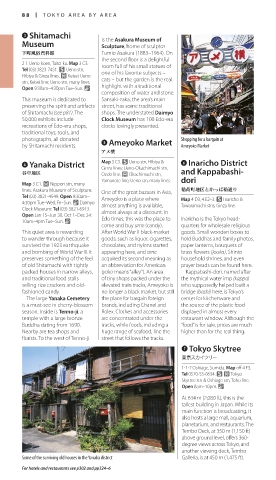
Some of the surviving old houses in the Yanaka district Galleria, is at 450 m (1,475 ft).
For hotels and restaurants see p302 and pp324–6
088-089_EW_Japan.indd 88 08/08/16 4:16 pm

