


Page 133 - Vogue - India (January 2020)
P. 133
Reuse


                                                     FOCUS
                               Conscious


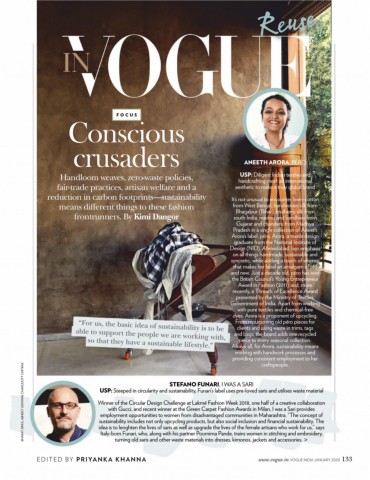
                                 crusaders                                                                    ANEETH ARORA, PÉRO


                                                                                                            USP: Diligent Indian textiles and
                            Handloom weaves, zero-waste policies,                                          handcrafting meet an international
                          fair-trade practices, artisan welfare and a                                     aesthetic to make a truly global brand

                      reduction in carbon footprints—sustainability                                     It’s not unusual to encounter linen-cotton

                           means different things to these fashion                                       from West Bengal, handwoven silk from
                                                                                                          Bhagalpur (Bihar), mulberry silk from
                                  frontrunners. By Kimi Dangor                                           south India, mashru and bandhani from
                                                                                                          Gujarat and chanderis from Madhya
                                                                                                         Pradesh in a single collection of Aneeth
                                                                                                        Arora’s label, péro. Arora, a textile design
                                                                                                         graduate from the National Institute of
                                                                                                       Design (NID), Ahmedabad, lays emphasis
                                                                                                         on all things handmade, sustainable and
                                                                                                        syncretic, while adding a touch of whimsy
                                                                                                         that makes her label an amalgam of old
                                                                                                        and new. Just a decade old, péro has won
                                                                                                        the British Council’s Young Entrepreneur
                                                                                                           Award in Fashion (2011) and, more
                                                                                                         recently, a Threads of Excellence Award
                                                                                                          presented by the Ministry of Textiles,
                                                                                                        Government of India. Apart from working
                                                                                                           with pure textiles and chemical-free
                                                                                                         dyes, Arora is a proponent of upcycling.
                                                                                                          From repurposing old péro pieces for
                                                                                                           clients and using waste in trims, tags
                                    “For us, the basic idea of sustainability is to be
                                                                                                         and bags, the brand adds one recycled
                                   able to support the people we are working with,
                                                                                                           piece to every seasonal collection.
                                        so that they have a sustainable lifestyle.”
                                                                                                        Above all, for Arora, sustainability means
                                                                                                          working with handwork processes and
                                                                                                         providing consistent employment to her
                                                                                                                     craftspeople.
           BHARAT SIKKA; ABHEET GIDWANI; CHARUDUTT CHITRAK


                                                                            STEFANO FUNARI, I WAS A SARI
                                             USP: Steeped in circularity and sustainability, Funari’s label uses pre-loved saris and utilises waste material


                                            Winner of the Circular Design Challenge at Lakmé Fashion Week 2018, one half of a creative collaboration
                                                 with Gucci, and recent winner at the Green Carpet Fashion Awards in Milan, I was a Sari provides
                                              employment opportunities to women from disadvantaged communities in Maharashtra. “The concept of
                                             sustainability includes not only upcycling products, but also social inclusion and fi nancial sustainability. The
                                             idea is to lenghten the lives of saris as well as upgrade the lives of the female artisans who work for us,” says
                                              Italy-born Funari, who, along with his partner Poornima Pande, trains women in stitching and embroidery,
                                                    turning old saris and other waste materials into dresses, kimonos, jackets and accessories. >


                 EDITED BY PRIYANKA KHANNA                                                                          www.vogue.in VOGUE INDIA JANUARY       133

