


Page 5 - Human Environment Interface (4)
P. 5
Brain Reading for Human-Machine Interfaces

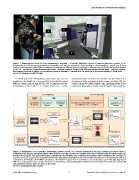
Figure 1. Experimental setup for the teleoperation scenario – a holistic feedback control of semi-autonomous robots. In the
teleoperation scenario an operator is wearing an exoskeleton and, with the support of a virtual scenario, is tele-manipulating a robotic arm. A: three
kinds of virtual response cubes (different responses are required for different types of warnings); B: different kinds of stimuli: unimportant stimulus
(STATE OK – no response required), warning (first target – response required), repeated and enhanced warning (second target – response required),
third warning (response is critical, e.g., exoskeleton control is disabled); C: labyrinth that the robot has to be moved through; D: virtual hand.
doi:10.1371/journal.pone.0081732.g001

   A central part of the teleoperation scenario (see Fig. 1) is an  autonomous robot as well as an interface for the control of a
exoskeleton developed by our group [50] to intuitively control      virtual scenario (for visualization of the scenario see Video S2). For
different robotic arms or legs [51,52]. The exoskeleton used for    control reasons the switch between two operating modes of the
teleoperation serves both as a control device for a semi-           exoskeleton: (i) a position control mode (PC) where the exoskeleton

Figure 2. Adaptation of an operator monitoring system by BR. The currently implemented message scheduling procedure which is
controlled by the operator monitoring system (OMS) is shown. The OMS considers the cognitive state that is detected by BR and allows to infer the
behavior of the human. The general procedure is described in the following: After a warning the operator’s EEG is analyzed by BR. Detection of
successes versus no success in the recognition of important information by BR allows to infer future behavior (response or no response) by eBR. As a
consequence, the behavior of the OMS is adapted, i.e., the tolerated response time is extended or a second warning is presented right away by the
OMS. In case the operator does not respond to the second warning, a third warning follows. Approximate time required for predictions made by BR
and predefined response times are given in the arrows.
doi:10.1371/journal.pone.0081732.g002

PLOS ONE | www.plosone.org                                          3 December 2013 | Volume 8 | Issue 12 | e81732

