


Page 8 - Human Environment Interface (4)
P. 8
Brain Reading for Human-Machine Interfaces

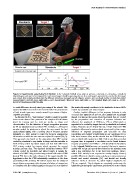
Figure 4. Experimental setup Labyrinth Oddball. In the Labyrinth Oddball setup subjects perform a dual-task, i.e., they play a virtualized
labyrinth game and react to less frequent first and second target stimuli by pressing a buzzer. A second target is presented in case that the first target
was missed. Brain activity recorded after the different stimuli was averaged over all subjects, sessions, and runs (total number of trials after artifact
removal: target 1 (red ERP curve, right side): n~1623; missed target 1 (blue ERP curve, right side): n~439; standards (black ERP curve): n~13598).
doi:10.1371/journal.pone.0081732.g004

to avoid differences in early visual processing of the stimuli. This      (for standards) mainly contributes to the similarities between ERPs
assures that differences in the EEG recorded after the presentation       evoked by standards and missed targets.
of both stimuli types were mainly caused by processes of higher
cognitive processing.                                                        Another implicit difference is that response behavior is only
                                                                          executed after target stimuli and not after standard and missed target
   As discussed in Sec. ‘‘Introduction’’ classifier transfer is possible  stimuli. It is known that motor-related potentials that are evoked
between two classes if the patterns of the samples of both classes        by the preparation and execution of response behavior can
(used for training and for test) are similar in shape and                 influence the amplitude of P300 (i.e., P3b in [43]) which is
characteristics. For the detection of target recognition processes        expected to be evoked by targets but not by standards and missed
by BR we substituted our test class in ML analysis, i.e., infrequent      targets. However, we can largely rule out a major impact on P300
samples evoked by situations in which the user missed the first           amplitude differences by motor-related activity and by this a major
targets (missed targets), with a training class of frequent samples       influence of response preparation and execution on class
(standards), i.e., EEG instances evoked by frequent unimportant           separability and classifier transferability in our experiment for at
information to which the user was not required to respond (Fig. 5).       least three reasons: First, studies showed that the P300 latency is
This approach was based on the assumption that ERP activity               not correlated with reaction time [42]. Only in case that a very fast
evoked by standards is very similar in shape and characteristic to        response time is requested a correlation can be found between
ERP activity evoked by missed targets and that both differ from           response preparation and P300, i.e., P3b (see [43] for discussion).
ERP activity evoked by targets, which represent the second                In the Labyrinth Oddball scenario we expected that motor response
training and test class. The expected similarities between EEG            activity will be late and poorly time-locked to the stimulus onset
activity evoked by standards and missed targets is mainly the             with a low correlation due to the dual task condition. Hence,
absence of a P300. Only perceived target stimuli will evoke a P300        related EEG activity is not expected to overlap largely. Second,
(mainly P3b due to the task relevance of the target stimuli). Our         possible differences related to motor activity are most prominent at
hypothesis is that the P300 substantially contribute to the class         frontal and central electrodes [57] and should not heavily
separability in ML learning. We further assume that the absence of        influence ERPs at electrode Pz, where highest amplitudes for
target detection processes, either because of a failure of recognition    P3b are expected. Third, subjects are constantly performing the
or complete miss (for missed targets) or because it is not required       labyrinth task during the experiment and therefore motor-related

PLOS ONE | www.plosone.org                                                6 December 2013 | Volume 8 | Issue 12 | e81732

