


Page 9 - Spok Inside Track
P. 9
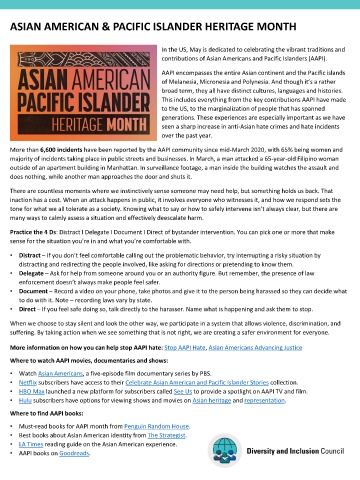
ASIAN AMERICAN & PACIFIC ISLANDER HERITAGE MONTH


                                                  In the US, May is dedicated to celebrating the vibrant traditions and
                                                  contributions of Asian Americans and Pacific Islanders (AAPI).

                                                  AAPI encompasses the entire Asian continent and the Pacific islands
                                                  of Melanesia, Micronesia and Polynesia. And though it’s a rather
                                                  broad term, they all have distinct cultures, languages and histories.
                                                  This includes everything from the key contributions AAPI have made
                                                  to the US, to the marginalization of people that has spanned
                                                  generations. These experiences are especially important as we have
                                                  seen a sharp increase in anti-Asian hate crimes and hate incidents
                                                  over the past year.

    More than 6,600 incidents have been reported by the AAPI community since mid-March 2020, with 65% being women and
    majority of incidents taking place in public streets and businesses. In March, a man attacked a 65-year-old Filipino woman
    outside of an apartment building in Manhattan. In surveillance footage, a man inside the building watches the assault and
    does nothing, while another man approaches the door and shuts it.
    There are countless moments where we instinctively sense someone may need help, but something holds us back. That
    inaction has a cost. When an attack happens in public, it involves everyone who witnesses it, and how we respond sets the
    tone for what we all tolerate as a society. Knowing what to say or how to safely intervene isn't always clear, but there are
    many ways to calmly assess a situation and effectively deescalate harm.

    Practice the 4 Ds: Distract I Delegate I Document I Direct of bystander intervention. You can pick one or more that make
    sense for the situation you’re in and what you’re comfortable with.
    • Distract – If you don’t feel comfortable calling out the problematic behavior, try interrupting a risky situation by
       distracting and redirecting the people involved, like asking for directions or pretending to know them.
    • Delegate – Ask for help from someone around you or an authority figure. But remember, the presence of law
       enforcement doesn’t always make people feel safer.
    • Document – Record a video on your phone, take photos and give it to the person being harassed so they can decide what
       to do with it. Note – recording laws vary by state.
    • Direct – If you feel safe doing so, talk directly to the harasser. Name what is happening and ask them to stop.

    When we choose to stay silent and look the other way, we participate in a system that allows violence, discrimination, and
    suffering. By taking action when we see something that is not right, we are creating a safer environment for everyone.

    More information on how you can help stop AAPI hate: Stop AAPI Hate, Asian Americans Advancing Justice
    Where to watch AAPI movies, documentaries and shows:

    • Watch Asian Americans, a five-episode film documentary series by PBS.
    • Netflix subscribers have access to their Celebrate Asian American and Pacific Islander Stories collection.
    • HBO Max launched a new platform for subscribers called See Us to provide a spotlight on AAPI TV and film.
    • Hulu subscribers have options for viewing shows and movies on Asian heritage and representation.

    Where to find AAPI books:
    • Must-read books for AAPI month from Penguin Random House.
    • Best books about Asian American identity from The Strategist.
    • LA Times reading guide on the Asian American experience.
    • AAPI books on Goodreads.

