


Page 370 - Towards Trustworthy Elections New Directions in Electronic Voting by Ed Gerck (auth.), David Chaum, Markus Jakobsson, Ronald L. Rivest, Peter Y. A. Ryan, Josh Benaloh, Miroslaw Kutylowski, Ben Adida ( (z-lib.org (1)
P. 370
S. Popoveniuc et al.
                          362


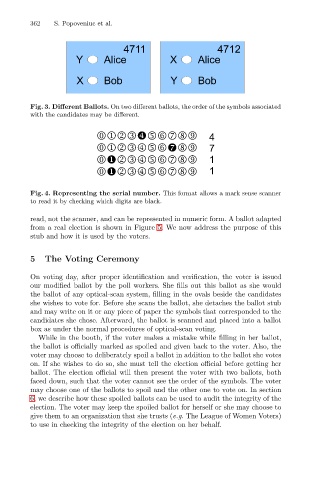
                          Fig. 3. Different Ballots. On two different ballots, the order of the symbols associated
                          with the candidates may be different.


                          Fig. 4. Representing the serial number. This format allows a mark sense scanner
                          to read it by checking which digits are black.

                          read, not the scanner, and can be represented in numeric form. A ballot adapted
                          from a real election is shown in Figure 5. We now address the purpose of this
                          stub and how it is used by the voters.


                          5   The Voting Ceremony

                          On voting day, after proper identification and verification, the voter is issued
                          our modified ballot by the poll workers. She fills out this ballot as she would
                          the ballot of any optical-scan system, filling in the ovals beside the candidates
                          she wishes to vote for. Before she scans the ballot, she detaches the ballot stub
                          and may write on it or any piece of paper the symbols that corresponded to the
                          candidates she chose. Afterward, the ballot is scanned and placed into a ballot
                          box as under the normal procedures of optical-scan voting.
                            While in the booth, if the voter makes a mistake while filling in her ballot,
                          the ballot is officially marked as spoiled and given back to the voter. Also, the
                          voter may choose to deliberately spoil a ballot in addition to the ballot she votes
                          on. If she wishes to do so, she must tell the election official before getting her
                          ballot. The election official will then present the voter with two ballots, both
                          faced down, such that the voter cannot see the order of the symbols. The voter
                          may choose one of the ballots to spoil and the other one to vote on. In section
                          6, we describe how these spoiled ballots can be used to audit the integrity of the
                          election. The voter may keep the spoiled ballot for herself or she may choose to
                          give them to an organization that she trusts (e.g. The League of Women Voters)
                          to use in checking the integrity of the election on her behalf.

