


Page 34 - Microsoft Word - Bogra-01-Community-11
P. 34
3.2.1 Bacground: Bogra Sadar, the largest upazila of Bogra Zila in respect of population came into
existence as a thana in 1821 and was upgraded to upazila in 1984. Nothing is definitely known about
the origin of the upazila name. It is learnt from zila gazetteers that during the last quarter of the
thirteenth century the prince Bughra Khan, youngest son of Gyasuddin Balban became the
Governor of Bengal. It is generally believed that the upazila might have been named after the name of
the then governor Bughra Khan.

3.2.2 Area and Location: The upazila occupies an area of 176.58 sq. km.. It is located between
24°41' and 24°59' north latitudes and 89°16' and 89°30' east longitudes. It is bounded on the north by
Shibganj Upazila, east by Gabtali Upazila, south by Shajahanpur Upazila and west by Kahaloo
Upazila.

3.2.3 Administrative/Geographic Unit: The upazila consists of 1 paurashava, 18 full and 2 part
wards, 111 mahallas, 11 unions, 93 populated mauzas and 122 villages. The average size of
population of each ward and mahalla are 17520 and 3157 respectively. On the other hand, the
average size of each union mauza and village are 18602, 2200 and 1677 respectively.

3.2.4 Housing and Household Characteristics: In the upazila, there are 131862 households.
Distribution of household by type shows that there are 98.28% general unit, 0.14% institutional and
1.58% other unit.

     • Household Size: The average household size (General) for the upazila is 4.0 persons, for
          rural area the size is also 4.0 and for urban area the size is slightly higher i.e. 4.1.

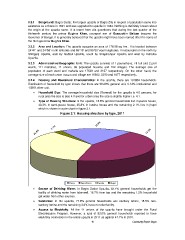
     • Type of Housing Structure: In the upazila, 18.8% general households live in pucca house,
          43.3% in semi-pucca house, 35.8% in kutcha house and the remaining 2.1% live in jhupri
          which is shown in a pie-chart in figure 2.1.

                               Figure 2.1: Housing structure by type, 2011

35.8%
                   2.1%
                                                                      18.8%

                                                                                                                                 43.3%

Pucca  Semi‐Pucca  Kutcha  Jhupri

• Source of Drinking Water: In Bogra Sadar Upazila, 82.1% general households get the
     facility of drinking water from tube-well, 16.7% from tap and the remaining 1.2% household
     get water from other sources.

• Sanitation: In the upazila, 77.9% general households use sanitary latrine, 18.5% non-
     sanitary latrine and the remaining 3.6% have no toilet facility.

• Access to Electricity: All the 11 unions of the upazila have brought under the Rural
     Electrification Program. However, a total of 83.0% general households reported to have
     electricity connection in the entire upazila in 2011 as against 47.7% in 2001.
                                                                    16 Community Report: Bogra

