


Page 317 - (ISC)² CISSP Certified Information Systems Security Professional Official Study Guide
P. 317
Determining Data Security Controls


               After defining data and asset classifications, it’s important to define
               the security requirements and identify security controls to implement
               those security requirements. Imagine that an organization has decided
               on data labels of Confidential/Proprietary, Private, Sensitive, and
               Public as described previously. Management then decides on a data

               security policy dictating the use of specific security controls to protect
               data in these categories. The policy will likely address data stored in
               files, in databases, on servers including email servers, on user systems,
               sent via email, and stored in the cloud.

               For this example, we’re limiting the type of data to only email. The
               organization has defined how it wants to protect email in each of the
               data categories. They decided that any email in the Public category

               doesn’t need to be encrypted. However, email in all other categories
               (Confidential/Proprietary, Private, Sensitive, and Public) must be
               encrypted when being sent (data in transit) and while stored on an
               email server (data at rest).

               Encryption converts cleartext data into scrambled ciphertext and
               makes it more difficult to read. Using strong encryption methods such
               as Advanced Encryption Standard with 256-bit cryptography keys

               (AES 256) makes it almost impossible for unauthorized personnel to
               read the text.

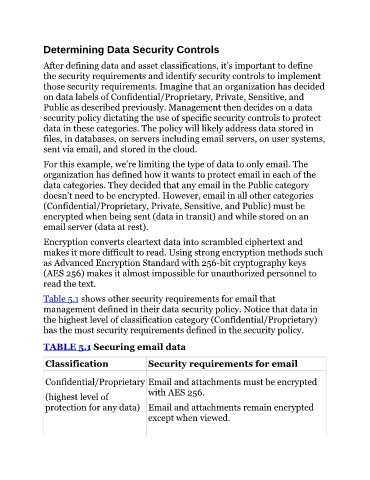
               Table 5.1 shows other security requirements for email that
               management defined in their data security policy. Notice that data in
               the highest level of classification category (Confidential/Proprietary)
               has the most security requirements defined in the security policy.


               TABLE 5.1 Securing email data

                Classification                    Security requirements for email


                Confidential/Proprietary Email and attachments must be encrypted
                                                  with AES 256.
                (highest level of
                protection for any data) Email and attachments remain encrypted
                                                  except when viewed.

