


Page 369 - (ISC)² CISSP Certified Information Systems Security Professional Official Study Guide
P. 369
Message integrity is enforced through the use of encrypted message
               digests, known as digital signatures, created upon transmission of a

               message. The recipient of the message simply verifies that the
               message’s digital signature is valid, ensuring that the message was not
               altered in transit. Integrity can be enforced by both public and secret
               key cryptosystems. This concept is discussed in detail in Chapter 7,
               “PKI and Cryptographic Applications.” The use of cryptographic hash
               functions to protect file integrity is discussed in Chapter 21, “Malicious
               Code and Application Attacks.”


               Authentication

               Authentication verifies the claimed identity of system users and is a
               major function of cryptosystems. For example, suppose that Bob
               wants to establish a communications session with Alice and they are
               both participants in a shared secret communications system. Alice
               might use a challenge-response authentication technique to ensure
               that Bob is who he claims to be.


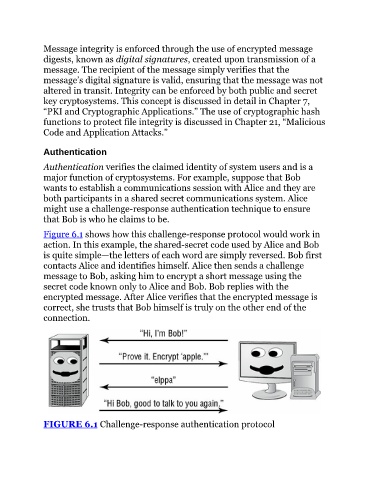
               Figure 6.1 shows how this challenge-response protocol would work in
               action. In this example, the shared-secret code used by Alice and Bob
               is quite simple—the letters of each word are simply reversed. Bob first
               contacts Alice and identifies himself. Alice then sends a challenge
               message to Bob, asking him to encrypt a short message using the
               secret code known only to Alice and Bob. Bob replies with the
               encrypted message. After Alice verifies that the encrypted message is

               correct, she trusts that Bob himself is truly on the other end of the
               connection.


               FIGURE 6.1 Challenge-response authentication protocol

