


Page 130 - fbkCardioDiabetes_2017
P. 130
106             Diabetic Cardiovascular Autonomic Neuropathy


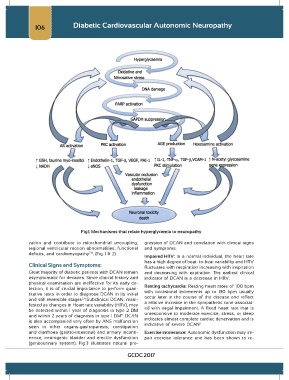
                                     Fig1: Mechanisms that relate hyperglycemia to neuropathy

              zation  and contribute  to mitochondrial  uncoupling,   gression of DCAN and correlation with clinical signs
              regional ventricular motion abnormalities, functional   and symptoms.
              deficits, and cardiomyopathy . (Fig 1 & 2)
                                        7,8
                                                                 Impaired HRV: In a normal individual, the heart rate
                                                                 has a high degree of beat- to-beat variability and HRV
              Clinical Signs and Symptoms:                       fluctuates with respiration increasing with inspiration
              Great majority of diabetic patients with DCAN remain   and decreasing  with expiration.  The  earliest  clinical
              asymptomatic for decades. Since clinical history and   indicator of DCAN is a decrease in HRV.
              physical examination are ineffective for its early de-  Resting tachycardia: Resting heart rates of 100 bpm
              tection,  it is  of crucial importance to perform  quan-  with occasional increments up  to 130 bpm  usually
              titative tests in order to diagnose DCAN in its initial   occur  later in the course of the disease  and  reflect
                                     2,4
              and still reversible stages .Subclinical DCAN, mani-  a relative increase in the sympathetic tone associat-
              fested as changes in Heart rate variability (HRV), may   ed  with vagal impairment. A  fixed  heart rate that  is
              be detected within 1 year of diagnosis in type 2 DM   unresponsive to moderate  exercise, stress, or  sleep
                                                      9
              and within 2 years of diagnosis in type 1 DM . DCAN   indicates almost complete cardiac denervation and is
              is also accompanied very often by ANS malfunction   indicative of severe DCAN .
                                                                                         1
              seen  in other  organs-gastroparesis,  constipation
              and diarrhoea (gastro-intestinal) and urinary inconti-  Exercise intolerance: Autonomic dysfunction may im-
              nence,  neurogenic bladder  and  erectile  dysfunction   pair  exercise  tolerance and  has been shown  to re-
              (genitourinary system). Fig.3 illustrates  natural  pro-

                                                         GCDC 2017

