


Page 416 - fbkCardioDiabetes_2017
P. 416
392       Percutaneous Coronary Intervention in The Management of Multi-Vessel CAD
                                       in Diabetics - is There Still A Role After Freedom Trial


              protocol-guided intensive medical therapy is feasible
              and improves outcomes in type 2 diabetes mellitus.
              In a nonrandomized  analysis  of survival/cardio-
              vascular  events and  control of 6 RFs (no  smoking,
              non-high-density lipoprotein  cholesterol  <130 mg/
              dl, triglycerides  <150 mg/dl,  blood  pressure  [systol-
              ic <130 mm Hg; diastolic <80 mm Hg], glycosylated
              hemoglobin  <7%)  in BARI 2D(6)  trial, there was a 2
              fold decrease in death rate in patients with all 6 risk
              factors in the optimal range compared to patients
              with 0 to 2 RFs in control.


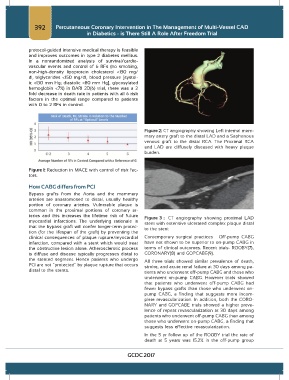
                                                                 Figure 2: CT angiography showing Left internal mam-
                                                                 mary artery graft to the distal LAD and a Saphenous
                                                                 venous graft  to the distal  RCA.  The  Proximal  RCA
                                                                 and LAD are  diffusely  diseased  with heavy plaque
                                                                 burden.


              Figure 1: Reduction in MACE with control of risk fac-
              tors.
              How CABG differs from PCI
              Bypass  grafts from the Aorta and the mammary
              arteries  are  anastomosed to distal, usually healthy
              portion  of coronary arteries.  Vulnerable  plaque  is
              common  in the  proximal  portions  of coronary ar-
              teries  and this increases  the lifetime  risk  of future   Figure 3 :  CT  angiography  showing  proximal  LAD
              myocardial infarctions. The underlying  rationale is   stent with extensive ulcerated complex plaque distal
              that the bypass graft will confer longer-term protec-  to the stent
              tion (for  the lifespan  of  the graft) by  preventing  the
              clinical consequences of  plaque  rupture/myocardial   Contemporary surgical practices – Off-pump CABG
              infarction,  compared  with a stent which  would treat   have not shown to be superior to on-pump CABG in
              the obstructive lesion alone. Atherosclerotic process   terms of clinical outcomes. Recent trials- ROOBY(7),
              is  diffuse  and  disease  typically  progresses  distal  to   CORONARY(8) and GOPCABE(9).
              the stented segment.  Hence  patients who undergo   All  three trials showed similar prevalence  of death,
              PCI are not “protected” by plaque rupture that occurs   stroke, and acute renal failure at 30 days among pa-
              distal to the stents.
                                                                 tients who underwent off-pump CABG and those who
                                                                 underwent on-pump  CABG. However  trials  showed
                                                                 that  patients who  underwent  off-pump CABG had
                                                                 fewer  bypass  grafts  than  those  who underwent on-
                                                                 pump CABG, a finding that  suggests  more  incom-
                                                                 plete  revascularization. In addition, both the CORO-
                                                                 NARY  and  GOPCABE trials  showed a higher  preva-
                                                                 lence of repeat revascularization  at  30  days among
                                                                 patients who underwent off-pump CABG than among
                                                                 those who underwent on-pump CABG, a finding that
                                                                 suggests less effective revascularization.
                                                                 In the  5 yr  follow up of the  ROOBY  trial the  rate of
                                                                 death at 5  years  was 15.2% in the off-pump  group


                                                         GCDC 2017

