


Page 421 - fbkCardioDiabetes_2017
P. 421
Percutaneous Heart Repair -                                 397
                                           Can We Replace Open Heart Surgery


                                                                    A (2)(n = 699) for high-risk surgical patients (Society
                                                                    of Thoracic Surgeons score >10%, surgeon assessed
                                                                    risk  of  mortality  >15%) and PARTNER  B(3) (n =  358,
                                                                    patients inoperable  by  assessment  of  2 surgeons).
                                                                    PARTNER A patients were  divided into femoral  ar-
                                                                    tery access transcatheter aortic valve replacement or
                                                                    none (n = 207), and then randomized to open aortic
                                                                    valve replacement (n = 351) or device (n = 348). Inclu-
                                                                    sion criteria included valve area <0.8 cm(2), gradient
                                                                    >40 mm Hg or peak >64 mm Hg, and survival >1 year.
                                                                    The end point of the study was 1-year mortality.
                                                                    It tried to answer two questions: 1. Was TAVR equiv-
                                                                    alent to surgical AVR (PARTNER A)
                                                                    2. Was TAVR better then medical therapy for inoper-
                                                                    able aortic stenosis (PARTNER B)
                                                                    Thirty-day mortality for PARTNER A was 3.4% for tran-
                                                                    scatheter aortic valve replacement and 6.5% for aor-
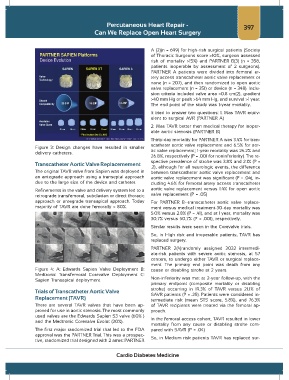
                 Figure  3: Design  changes have resulted  in smaller
                 delivery catheters.                                tic valve replacement; 1-year mortality was 24.2% and
                                                                    26.8%, respectively (P = .001 for noninferiority). The re-
                                                                    spective prevalence of stroke was 3.8% and 2.1% (P =
                 Transcatheter Aortic Valve Replacemement
                                                                    .2), although for all neurologic events, the difference
                 The original TAVR valve from Sapien was deployed in   between transcatheter  aortic valve replacement and
                 an antegrade approach using a transeptal approach   aortic valve replacement was significant (P = .04), in-
                 due to the large size of the device and catheter.  cluding 4.6% for femoral artery access transcatheter

                 Refinements in the valve and delivery system led to a   aortic valve replacement  versus  1.4%  for open aortic
                 retrograde transfemoral, subclavian or direct thoracic   valve replacement (P = .05)
                 approach  or  antegrade  transapical  approach.  Today   For  PARTNER  B--transcatheter  aortic valve replace-
                 majority of TAVR are done femorally > 80%.         ment versus medical treatment-30-day mortality was
                                                                    5.0% versus 2.8% (P = .41), and at 1 year, mortality was
                                                                    30.7% versus 50.7% (P < .001), respectively.

                                                                    Similar results were seen in the Corevalve trials.
                                                                    So,  in High  risk  and inoperable  patients, TAVR has
                                                                    replaced surgery.

                                                                    PARTNER 2(4)randomly  assigned  2032  intermedi-
                                                                    ate-risk  patients with severe  aortic stenosis,  at 57
                                                                    centers, to undergo either TAVR or surgical replace-
                                                                    ment. The  primary  end  point  was  death from  any
                 Figure  4: A: Edwards Sapien  Valve Deployment B:   cause or disabling stroke at 2 years.
                 Medtronic Transfemoral Corevalve Deployment C:
                 Sapien Transapical deployment.                     Non-inferiority was met at 2-year follow-up, with the
                                                                    primary  endpoint (composite mortality or  disabling
                 Trials of Transcatheter Aortic Valve               stroke)  occurring in 19.3%  of TAVR versus  21.1%  of
                                                                    SAVR patients (P = .25). Patients were considered in-
                 Replacement (TAVR)                                 termediate risk  (mean  STS  score, 5.8%),  and  76.3%
                 There  are  several  TAVR valves that  have been ap-  of TAVR recipients  were  treated via the femoral  ap-
                 proved for use in aortic stenosis. The most commonly   proach.
                 used valves are the Edwards Sapien S3 valve (60% )   In the femoral access cohort, TAVR resulted in lower
                 and the Medtronic Corevalve Evolut (30%).
                                                                    mortality from any cause  or disabling stroke  com-
                 The  first major  randomized trial  that  led  to the FDA   pared with SAVR (P = .04)
                 approval was the PARTNER Trial. This was a prospec-  So, in Medium risk patients TAVR has replaced sur-
                 tive, randomized trial designed with 2 arms: PARTNER


                                                    Cardio Diabetes Medicine

