


Page 435 - fbkCardioDiabetes_2017
P. 435
DM Management in Special Situations                                        411
                                  Post Renal Transplant and Post CABG


                 tient’s metabolism is in steady statewith reasonable   arately and thus offers greater flexibility. Hence it is
                 pre-operative  blood glucose levels; hence  it should   better  used  in  severely  uncontrolled,  brittle  patients
                 not be  used  in severely  hyperglycemic,  unstable or   or in special circumstances  like  CABG surgery.  This
                 brittle  patients. After  the start of  the infusion the   system  needs  more  dosage  adjustments than  the
                 blood  glucose levels  are  monitored hourly.  Special   GKI regimen Overall outcome with regards to glycae-
                 caution  needs to be taken in patients with  compro-  mic  control,  hypoglycaemic events, post-  operative
                 mised renal function or those on ACE inhibitors.The   infection rates  and duration  of  stay  in  hospital  was
                 GKI regimen is  considerably  simpler  and because   similar to GKI regimen.
                 insulin is  given in balanced  proportion  the infusion   After surgery patient often develops hypoglycaemia,
                 rate is not so critical.
                                                                    which  might go  undetected. As  soon  as  the patient
                 II. Separate line approach: In this system, one infusion   is able to eat, we can restart subcutaneous injections
                 line is used to deliver 10% dextrose solution at 100ml/  of insulin. The i.v. insulin should be discontinued after
                 hr preferably using a high precision pump while the   about one hour of resumption of subcutaneous insu-
                 soluble  insulin infusion can be  given  either  through   lin injection. The  insulin requirement  increases  over
                 a separate vein or ‘piggy-backed’ (preferable) into the   baseline requirements on the day of surgery and the
                 glucose line and the rate is titrated to maintain blood   first two postoperative days and usually comes down
                 glucose in target range. This facilitates the ability to   to normal levels  on the third post-operative  day in
                                      5
                 make changes in the insulin or glucose infusion sep-  an otherwise  uncomplicated  surgery.  The  mean in-

                 Clinical scenario  concerns                   Treatment considerations   Potential  problems
                 Immediate post    High-dose immune suppression,   Frequently require iv insulin   Requires diligent monitoring of
                 transplant        pain ,and stress are common,   Infusion protocol       blood glucose
                                   Often under observation in   Hourly blood  glucose moni-  Frequent adjustment of insulin
                                   intensive care unit or Require   toring                dose based on algorithm and
                                   critical care
                                                                                          or anticipated dose changes to
                                                                                          cover  corticosteroids or other
                                                                                          changes
                 First week post   Increased nutritional intake   High-dose immuno suppression  Insulin requirements may
                 transplant                                                               change,  Daily due to renal
                                   Steroid doses weaning and/or   Transition to sc insulin when   function changes, Increased
                                   starting oral intake        stable
                                                                                          Nutritional intake
                                   Rapid improvement in renal   Calculate sc insulin dose from
                                   function (after kidney transplant)  last 8–24h iv insulin require-
                                                               ment
                                                               Monitor blood glucose atleast
                                                               4times daily
                 Acute steroid bolus  Increased insulin requirements  Consider NPH insulin for steroid  If blood glucose rises signifi-
                 (eg. for Acute rejec-  Bolus or, if very high-dose ste-                  cantly when
                 tion)
                                   roid, temporary iv insulin                             On sc insulin, consider tempo-
                                                               Transition back to previous
                                   Fluctuations in renal function,   insulin Regimen once steroid   rary  iv insulin
                                   particularly, after kidney trans-  complete, Noting any  changes
                                   plant                       in renal function
                 TPN or Enteral    Increased insulin requirements   Consider iv insulin as drip  Adjust insulin dose for chang-
                 feeding           and/or in TPN bag                                      es in TPN/tube feed rate or
                                                               Once iv requirements are
                                                               established and stable, switch   dextrose concentration, Long
                                                               to NPH insulin every8h plus   acting insulin held or decreased
                                                               fast-acting correction insulin   significantly if TPN or tube
                                                               every 4 to 6h              feeds stopped

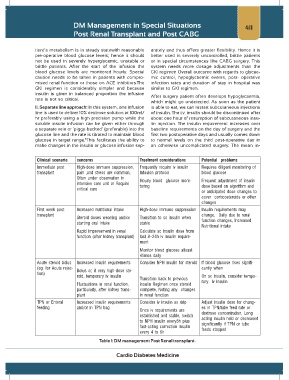
                                             Table 1: DM management Post Renal transplant-


                                                    Cardio Diabetes Medicine

