


Page 208 - Critical Care Nursing Demystified
P. 208
Chapter 4  CARE OF THE PATIENT WITH CRITICAL CARDIAC RHY THM DISTURBANCE NEEDS        193


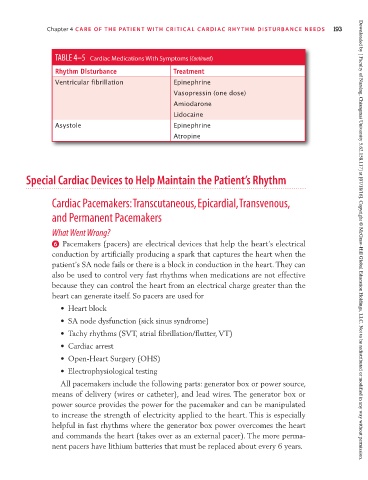
                               TABLE 4–5  Cardiac Medications With Symptoms (Continued)
                               Rhythm Disturbance                Treatment
                               Ventricular fibrillation          Epinephrine
                                                                 Vasopressin (one dose)
                                                                 Amiodarone
                                                                 Lidocaine
                               Asystole                          Epinephrine
                                                                 Atropine


                       Special Cardiac Devices to Help Maintain the Patient’s Rhythm


                               Cardiac Pacemakers: Transcutaneous, Epicardial, Transvenous,

                               and Permanent Pacemakers

                               What Went Wrong?
                               6   Pacemakers (pacers) are electrical devices that help the heart’s electrical      Downloaded by [ Faculty of Nursing, Chiangmai University 5.62.158.117] at [07/18/16]. Copyright © McGraw-Hill Global Education Holdings, LLC. Not to be redistributed or modified in any way without permission.
                               conduction by artificially producing a spark that captures the heart when the
                               patient’s SA node fails or there is a block in conduction in the heart. They can
                               also be used to control very fast rhythms when medications are not effective
                               because they can control the heart from an electrical charge greater than the
                               heart can generate itself. So pacers are used for
                                 •   Heart block
                                 •   SA node dysfunction (sick sinus syndrome)
                                 •   Tachy rhythms (SVT, atrial fibrillation/flutter, VT)
                                 •   Cardiac arrest

                                 •   Open-Heart Surgery (OHS)
                                 •   Electrophysiological testing
                                 All pacemakers include the following parts: generator box or power source,
                               means of delivery (wires or catheter), and lead wires. The generator box or
                               power source provides the power for the pacemaker and can be manipulated
                               to increase the strength of electricity applied to the heart. This is especially
                               helpful in fast rhythms where the generator box power overcomes the heart
                               and commands the heart (takes over as an external pacer). The more perma-
                               nent pacers have lithium batteries that must be replaced about every 6 years.

