


Page 405 - Critical Care Nursing Demystified
P. 405
390        CRITICAL CARE NURSING  DeMYSTIFIED


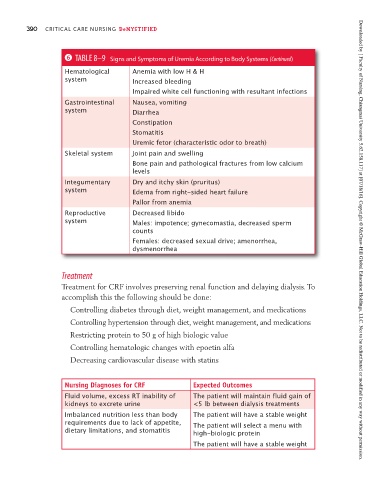
                              6  TABLE 8–9  Signs and Symptoms of Uremia According to Body Systems (Continued)

                             Hematological      Anemia with low H & H
                             system             Increased bleeding
                                                Impaired white cell functioning with resultant infections
                             Gastrointestinal   Nausea, vomiting
                             system             Diarrhea
                                                Constipation
                                                Stomatitis
                                                Uremic fetor (characteristic odor to breath)
                             Skeletal system    Joint pain and swelling
                                                Bone pain and pathological fractures from low calcium
                                                levels
                             Integumentary      Dry and itchy skin (pruritus)
                             system             Edema from right-sided heart failure
                                                Pallor from anemia
                             Reproductive       Decreased libido
                             system             Males: impotence; gynecomastia, decreased sperm
                                                counts
                                                Females: decreased sexual drive; amenorrhea,                    Downloaded by [ Faculty of Nursing, Chiangmai University 5.62.158.117] at [07/18/16]. Copyright © McGraw-Hill Global Education Holdings, LLC. Not to be redistributed or modified in any way without permission.
                                                dysmenorrhea


                            Treatment
                            Treatment for CRF involves preserving renal function and delaying dialysis. To
                            accomplish this the following should be done:
                               Controlling diabetes through diet, weight management, and medications
                               Controlling hypertension through diet, weight management, and medications

                               Restricting protein to 50 g of high biologic value
                               Controlling hematologic changes with epoetin alfa
                               Decreasing cardiovascular disease with statins


                             Nursing Diagnoses for CRF           Expected Outcomes
                             Fluid volume, excess RT inability of  The patient will maintain fluid gain of
                             kidneys to excrete urine            <5 lb between dialysis treatments
                             Imbalanced nutrition less than body   The patient will have a stable weight
                             requirements due to lack of appetite,   The patient will select a menu with
                             dietary limitations, and stomatitis  high-biologic protein
                                                                 The patient will have a stable weight

