


Page 400 - Critical Care Nursing Demystified
P. 400
Chapter 8  CARE OF THE PATIENT WITH CRITICAL RENAL NEEDS        385


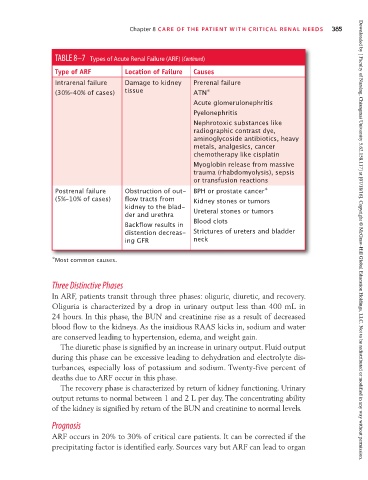
                               TABLE 8–7  Types of Acute Renal Failure (ARF) (Continued)
                               Type of ARF         Location of Failure  Causes
                               Intrarenal failure  Damage to kidney   Prerenal failure
                               (30%–40% of cases)  tissue             ATN ∗
                                                                      Acute glomerulonephritis
                                                                      Pyelonephritis
                                                                      Nephrotoxic substances like
                                                                      radiographic contrast dye,
                                                                      aminoglycoside antibiotics, heavy
                                                                      metals, analgesics, cancer
                                                                      chemotherapy like cisplatin
                                                                      Myoglobin release from massive
                                                                      trauma (rhabdomyolysis), sepsis
                                                                      or transfusion reactions
                               Postrenal failure   Obstruction of out-  BPH or prostate cancer ∗
                               (5%–10% of cases)   flow tracts from   Kidney stones or tumors
                                                   kidney to the blad-
                                                   der and urethra    Ureteral stones or tumors
                                                                      Blood clots
                                                   Backflow results in
                                                   distention decreas-  Strictures of ureters and bladder
                                                   ing GFR            neck                                          Downloaded by [ Faculty of Nursing, Chiangmai University 5.62.158.117] at [07/18/16]. Copyright © McGraw-Hill Global Education Holdings, LLC. Not to be redistributed or modified in any way without permission.

                               ∗ Most common causes.


                               Three Distinctive Phases
                               In ARF, patients transit through three phases: oliguric, diuretic, and recovery.
                               Oliguria is characterized by a drop in urinary output less than 400 mL in
                               24 hours. In this phase, the BUN and creatinine rise as a result of decreased
                               blood flow to the kidneys. As the insidious RAAS kicks in, sodium and water
                               are conserved leading to hypertension, edema, and weight gain.
                                 The diuretic phase is signified by an increase in urinary output. Fluid output
                               during this phase can be excessive leading to dehydration and electrolyte dis-
                               turbances, especially loss of potassium and sodium. Twenty-five percent of
                               deaths due to ARF occur in this phase.
                                 The recovery phase is characterized by return of kidney functioning. Urinary
                               output returns to normal between 1 and 2 L per day. The concentrating ability
                               of the kidney is signified by return of the BUN and creatinine to normal levels.

                               Prognosis
                               ARF occurs in 20% to 30% of critical care patients. It can be corrected if the
                               precipitating factor is identified early. Sources vary but ARF can lead to organ

