


Page 673 - Hall et al (2015) Principles of Critical Care-McGraw-Hill
P. 673
492     PART 4: Pulmonary Disorders


                                                                       to tidal volume. In addition, a minute ventilation higher than 10 L/min
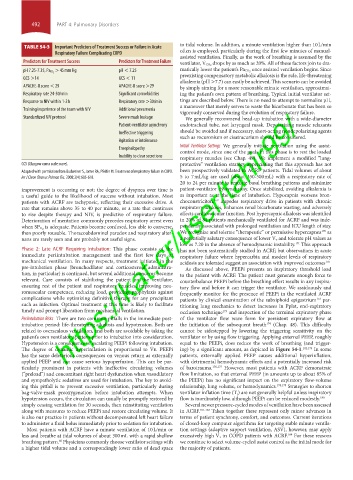
                   TABLE 54-3     Important Predictors of Treatment Success or Failure in Acute
                             Respiratory Failure Complicating COPD     often is employed, particularly during the first few minutes of manual-
                                                                       assisted ventilation. Finally, as the work of breathing is assumed by the
                  Predictors for Treatment Success  Predictors for Treatment Failure  ventilator, V ˙  CO 2  drops by as much as 20%. All of these factors join to dra-
                             > 45 mm Hg           pH < 7.25            matically lower the patient’s Pa CO 2  once assisted ventilation begins. Since
                  pH 7.25-7.35, Pa CO 2                                preexisting compensatory metabolic alkalosis is the rule, life-threatening
                  GCS >14                         GCS < 11             alkalemia (pH >7.7) can easily be achieved. This scenario can be avoided
                  APACHE-II score < 29            APACHE-II score >29  by simply aiming for a more reasonable minute ventilation, approximat-
                  Respiratory rate 24-30/min      Significant comorbidities  ing the patient’s own pattern of breathing. Typical initial ventilator set-
                  Response to NIV within 1-2 h    Respiratory rate >30/min  tings are described below. There is no need to attempt to normalize pH,
                                https://kat.cr/user/tahir99/
                  Training/experience of the team with NIV  Additional pneumonia  a maneuver that merely serves to waste the bicarbonate that has been so
                                                                       vigorously conserved during the evolution of respiratory failure.
                  Standardized NIV protocol       Severe mask leakage    We generally recommend head-up intubation with a wide-diameter
                                                  Patient-ventilator asynchrony  endotracheal tube, not laryngeal mask. Depolarizing muscle relaxants
                                                  Ineffective triggering  should be avoided and if necessary, short-acting nondepolarizing agents
                                                  Agitation or intolerance  such as rocuronium or cisatracurium should be considered.
                                                  Encephalopathy       Initial Ventilator Settings  We generally initiate  ventilation  using the  assist-
                                                                       control mode, since one of the goals in this phase is to rest the loaded
                                                  Inability to clear secretions  respiratory muscles (see Chap. 49). We implement a modified “lung-
                 GCS (Glasgow coma scale score).                       protective” ventilation strategy appreciating that this approach has not
                 Adapted with permission from Budweiser S, Jorres RA, Pfeifer M. Treatment of respiratory failure in COPD.   been prospectively validated in ACRF patients. Tidal volumes of about
                 Int J Chron Obstruc Pulmon Dis. 2008;3(4):605-618.    5 to 7 mL/kg are used (about 350-500 mL) with a respiratory rate of
                                                                       20 to 24 per minute to emulate basal breathing patterns and minimize
                 improvement is occurring or not; the degree of dyspnea over time is   patient-ventilator dyssynchrony. Once stabilized, avoiding alkalemia is
                 a useful guide to the likelihood of success without intubation. Most   as important as at the time of intubation. Hypocapnia worsens bron-
                                                                                   169
                 patients with ACRF are tachypneic, reflecting their excessive drive. A   choconstriciton,  impedes respiratory drive in patients with chronic
                 rate that remains above 35 to 40 per minute, or a rate that continues   respiratory acidosis, enhances renal bicarbonate wasting, and adversely
                 to rise despite therapy and NIV, is predictive of respiratory failure.   affects cardiovascular function. Post hypercapnic alkalosis was identified
                 Deterioration of mentation commonly precedes respiratory arrest even   in 20% of 84 patients mechanically ventilated for ACRF and was inde-
                          is adequate. Patients become confused, less able to converse,   pendently associated with prolonged ventilation and ICU length of stay.
                 when SP O 2
                                                                                                                       170
                 then poorly rousable. Thoracoabdominal paradox and respiratory alter-  We recognize and tolerate “therapeutic” or permissive hypercapnea  as
                 nans are rarely seen and are probably not useful signs.  a potentially salutary consequence of lower V t and tolerate pH values as
                                                                       low as 7.20 in the absence of hemodynamic instability.  This approach
                                                                                                              171
                 Phase 2: Late ACRF Requiring Intubation:  This phase consists of the   has not been systematically studied in ACRF, but observations in acute
                 immediate periintubation management and the first few days of   respiratory failure where hypercarbia and modest levels of respiratory
                 mechanical ventilation. In many respects, treatment initiated in the   acidosis are tolerated suggest an association with improved outcomes 170
                 pre-intubation phase (bronchodilator and corticosteroid administra-  As discussed above, PEEPi presents an inspiratory threshold load
                 tion, in  particular) is continued, but several additional concerns become     to the patient with ACRF. The patient must generate enough force to
                 relevant.  Care  consists  of  stabilizing  the  patient  on  the  ventilator,   counterbalance PEEPi before the breathing effort results in any inspira-
                 ensuring  rest  of  the patient  and respiratory muscles,  improving  neu-  tory flow and before it can trigger the ventilator. We assiduously and
                 romuscular competence, reducing load, providing prophylaxis against   frequently monitor for the presence of PEEPi in the ventilated ACRF
                 complications while optimizing definitive therapy for any precipitant   patients by clinical examination of the subxiphoid epigastrium  par-
                                                                                                                      172
                 such as infection. Optimal treatment at this time is likely to facilitate   titioning lung mechanics to detect increases in Pplat, end-expiratory
                 timely and prompt liberation from mechanical ventilation.  occlusion technique  and inspection of the terminal expiratory phase
                                                                                      173
                 Periintubation Risks  There are two common pitfalls in the immediate post-  of the ventilator flow wave form for persistent expiratory flow at
                 intubation period: life-threatening alkalosis and hypotension. Both are   the initiation of the subsequent breath  (Chap. 48). This difficulty
                                                                                                     174
                 related to overzealous ventilation, and both are avoidable by taking the   cannot be sidestepped by lowering the  triggering sensitivity on  the
                 patient’s own ventilatory pattern prior to intubation into consideration.   ventilator or by using flow triggering. Applying external PEEP, roughly
                 Hypotension is a consequence of escalating PEEPi following intubation.   equal  to  the  PEEPi,  does  reduce  the  work  of  breathing  (and  trigger-
                 The degree of dynamic hyperinflation is proportional to V ˙ e. PEEPi   ing) by a significant amount, as depicted in Figure 54-1. 102,175  In some
                 has the same deleterious consequences on venous return as externally   patients, externally applied PEEP causes additional hyperinflation,
                 applied PEEP and can cause serious hypoperfusion. This can be par-  with detrimental hemodynamic effects and a potentially increased risk
                 ticularly prominent in patients with ineffective circulating volumes   of barotrauma. 176,177  However, most patients with ACRF demonstrate
                 (“preload”) and concomitant right heart dysfunction when vasodilatory   flow limitation, so that external PEEP (in amounts up to about 85% of
                 and sympatholytic sedatives are used for intubation. The key to avoid-  the PEEPi) has no significant impact on the expiratory flow-volume
                 ing this pitfall is to prevent excessive ventilation, particularly during   relationship, lung volume, or hemodynamics. 178,179  Strategies to shorten
                 bag-valve-mask preoxygenation before intubation attempts. When   ventilator inflation time (T ) are not generally helpful unless inspiratory
                                                                                           I
                 hypotension occurs, the circulation can usually be promptly restored by   flow is inordinately low, although PEEPi can be reduced modestly. 180
                 simply ceasing ventilation for 30 seconds, then reinstituting ventilation   Several newer pressure-cycled modes of ventilation have been assessed
                 along with measures to reduce PEEPi and restore circulating volume. It   in ACRF. 181-183  Taken together these represent only minor advances in
                 is also our practice in patients without decompensated left heart failure   terms of patient synchrony, comfort, and outcomes. Current iterations
                 to administer a fluid bolus immediately prior to sedation for intubation.  of closed-loop computer algorithms for targeting stable minute ventila-
                   Most patients with ACRF have a minute ventilation of 10 L/min or   tion settings (adaptive support ventilation, ASV), however, may apply
                 less and breathe at tidal volumes of about 300 mL with a rapid shallow   excessively high V t in COPD patients with ACRF.  For these reasons
                                                                                                            184
                 breathing pattern.  Physicians commonly choose ventilator settings with   we continue to select volume-cycled assist control as the initial mode for
                              60
                 a higher tidal volume and a correspondingly lower ratio of dead space   the majority of patients.


            section04.indd   492                                                                                       1/23/2015   2:20:09 PM

