


Page 117 - Psychology of Wounds and Wound Care in Clinical Practice ( PDFDrive )
P. 117
Theories of QoL and Wellbeing  91


                   Time 1     Time 2    Time 3    Time 4
                    ideal self
                    Actual self

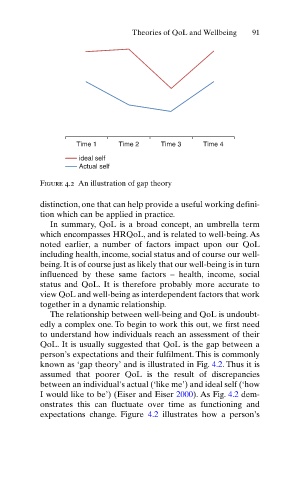
             Figure 4.2     An illustration of gap theory

           distinction, one that can help provide a useful working defini-
           tion which can be applied in practice.
               In summary, QoL is a broad concept, an umbrella term
           which encompasses HRQoL, and is related to well-being. As
           noted earlier, a number of factors impact upon our QoL
           including health, income, social status and of course our well-
           being. It is of course just as likely that our well-being is in turn
           influenced by these same factors – health, income, social
             status and QoL. It is therefore probably more accurate to
           view QoL and well-being as interdependent factors that work
           together in a dynamic relationship.
              The relationship between well-being and QoL is undoubt-
           edly a complex one. To begin to work this out, we first need
           to understand how individuals reach an assessment of their
           QoL. It is usually suggested that QoL is the gap between a
           person’s expectations and their fulfilment. This is commonly
           known as ‘gap theory’ and is illustrated in Fig.   4.2 . Thus it is
           assumed that poorer QoL is the result of discrepancies
           between an individual's actual (‘like me’) and ideal self (‘how
           I would like to be’) (Eiser and Eiser   2000 ). As Fig.  4.2  dem-
           onstrates this can fluctuate over time as functioning and
           expectations change. Figure   4.2  illustrates how a person’s

