


Page 125 - Psychology of Wounds and Wound Care in Clinical Practice ( PDFDrive )
P. 125
Measuring Well-Being  99


                                   Well-Being

                  Physical          Social           Mental
                                   Impact on               Uncertainty
           Diagnosis  Treatment  Pain  Isolation  family and  Stigma  Depression  Stress and   and
                                    friends           worry  frustration
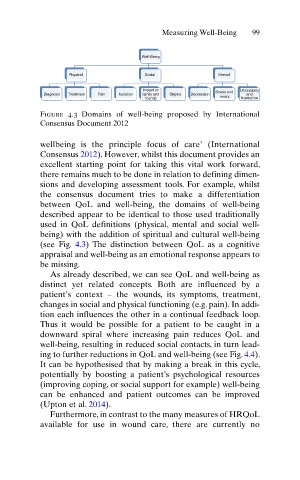
             Figure  4.3    Domains of well-being proposed by International

           Consensus Document 2012
           wellbeing is the principle focus of care’ (International
           Consensus   2012 ). However, whilst this document provides an
           excellent starting point for taking this vital work forward,
           there remains much to be done in relation to defining dimen-
           sions and developing assessment tools. For example, whilst
           the consensus document tries to make a differentiation
           between QoL and well-being, the domains of well-being
           described appear to be identical to those used traditionally
           used in QoL definitions (physical, mental and social well-
           being) with the addition of spiritual and cultural well-being
           (see Fig.   4.3 )  The distinction between QoL as a cognitive
           appraisal and well-being as an emotional response appears to
           be missing.
                As already described, we can see QoL and well-being as
           distinct yet related concepts. Both are influenced by a
           patient’s context – the wounds, its symptoms, treatment,
           changes in social and physical functioning (e.g. pain). In addi-
           tion each influences the other in a continual feedback loop.
           Thus it would be possible for a patient to be caught in a
           downward spiral where increasing pain reduces QoL and
           well-being, resulting in reduced social contacts, in turn lead-
           ing to further reductions in QoL and well-being (see Fig.   4.4 ).
           It can be hypothesised that by making a break in this cycle,
           potentially by boosting a patient’s psychological resources
           (improving coping, or social support for example) well-being
           can be enhanced and patient outcomes can be improved
           (Upton et al.   2014 ).
                Furthermore, in contrast to the many measures of HRQoL
           available for use in wound care, there are currently no

