


Page 126 - Psychology of Wounds and Wound Care in Clinical Practice ( PDFDrive )
P. 126
100  Chapter 4.  Quality of Life and Well- Being


            Symptoms        Pain      Treatment    Social impact


                                                   Psychological
                    QoL               Well-Being
                                                     resources


                                         Psychological outcome


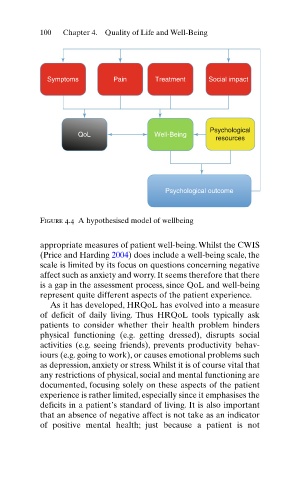
             Figure 4.4     A hypothesised model of wellbeing

             appropriate measures of patient well-being. Whilst the CWIS
           (Price and Harding   2004 ) does include a well-being scale, the
           scale is limited by its focus on questions concerning negative
           affect such as anxiety and worry. It seems therefore that there
           is a gap in the assessment process, since QoL and well-being
           represent quite different aspects of the patient experience.
               As it has developed, HRQoL has evolved into a measure
           of deficit of daily living.  Thus HRQoL tools typically ask
           patients to consider whether their health problem hinders
           physical functioning (e.g. getting dressed), disrupts social
           activities (e.g. seeing friends), prevents productivity behav-
           iours (e.g. going to work), or causes emotional problems such
           as depression, anxiety or stress. Whilst it is of course vital that
           any restrictions of physical, social and mental functioning are
           documented, focusing solely on these aspects of the patient
           experience is rather limited, especially since it emphasises the
           deficits in a patient’s standard of living. It is also important
           that an absence of negative affect is not take as an indicator
           of positive mental health; just because a patient is not

