


Page 173 - Psychology of Wounds and Wound Care in Clinical Practice ( PDFDrive )
P. 173
148  Chapter 6.  Treatment

                4
                         Pain
              Numerical pain/stress rating  2.5 2 1
               3.5
                         Stress
                3


               1.5


               0.5
                0
                         Atraumatic           Conventional
                                   Dressing type

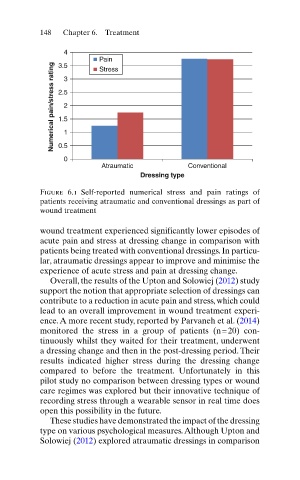
             Figure  6.1    Self-reported numerical stress and pain ratings of
           patients receiving atraumatic and conventional dressings as part of
           wound treatment

           wound treatment experienced significantly lower episodes of
           acute pain and stress at dressing change in comparison with
           patients being treated with conventional dressings. In particu-
           lar, atraumatic dressings appear to improve and minimise the
           experience of acute stress and pain at dressing change.
               Overall, the results of the Upton and Solowiej (  2012 ) study
           support the notion that appropriate selection of dressings can
           contribute to a reduction in acute pain and stress, which could
           lead to an overall improvement in wound treatment experi-
           ence. A more recent study, reported by Parvaneh et al. (  2014 )
           monitored the stress in a group of patients (n = 20) con-
           tinuously whilst they waited for their treatment, underwent
           a dressing change and then in the post-dressing period. Their
           results indicated higher stress during the  dressing change
           compared to before the treatment. Unfortunately in this
           pilot study no comparison between dressing types or wound
           care regimes was explored but their innovative technique of
           recording stress through a wearable sensor in real time does
           open this possibility in the future.
               These studies have demonstrated the impact of the dressing
           type on various psychological measures. Although Upton and
           Solowiej (  2012 ) explored atraumatic dressings in  comparison

