


Page 216 - Clinical Anatomy
P. 216
ECA3  7/18/06  6:45 PM  Page 201


                                                                      The spaces of the hand   201


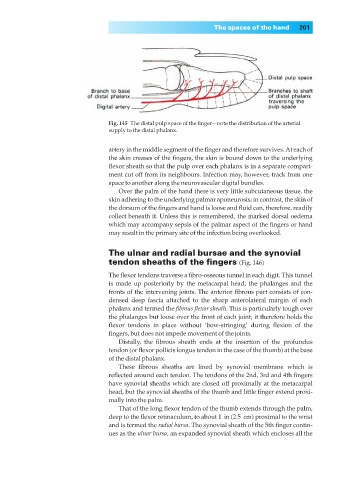
                                        Fig. 145◊The distal pulp space of the finger—note the distribution of the arterial
                                        supply to the distal phalanx.

                                        artery in the middle segment of the finger and therefore survives. At each of
                                        the skin creases of the fingers, the skin is bound down to the underlying
                                        flexor sheath so that the pulp over each phalanx is in a separate compart-
                                        ment cut off from its neighbours. Infection may, however, track from one
                                        space to another along the neurovascular digital bundles.
                                          Over the palm of the hand there is very little subcutaneous tissue, the
                                        skin adhering to the underlying palmar aponeurosis; in contrast, the skin of
                                        the dorsum of the fingers and hand is loose and fluid can, therefore, readily
                                        collect beneath it. Unless this is remembered, the marked dorsal oedema
                                        which may accompany sepsis of the palmar aspect of the fingers or hand
                                        may result in the primary site of the infection being overlooked.

                                        The ulnar and radial bursae and the synovial
                                        tendon sheaths of the fingers (Fig. 146)

                                        The flexor tendons traverse a fibro-osseous tunnel in each digit. This tunnel
                                        is made up posteriorly by the metacarpal head, the phalanges and the
                                        fronts of the intervening joints. The anterior fibrous part consists of con-
                                        densed deep fascia attached to the sharp anterolateral margin of each
                                        phalanx and termed the fibrous flexor sheath. This is particularly tough over
                                        the phalanges but loose over the front of each joint; it therefore holds the
                                        flexor tendons in place without ‘bow-stringing’ during flexion of the
                                        fingers, but does not impede movement of the joints.
                                          Distally, the fibrous sheath ends at the insertion of the profundus
                                        tendon (or flexor pollicis longus tendon in the case of the thumb) at the base
                                        of the distal phalanx.
                                          These fibrous sheaths are lined by synovial membrane which is
                                        reflected around each tendon. The tendons of the 2nd, 3rd and 4th fingers
                                        have synovial sheaths which are closed off proximally at the metacarpal
                                        head, but the synovial sheaths of the thumb and little finger extend proxi-
                                        mally into the palm.
                                          That of the long flexor tendon of the thumb extends through the palm,
                                        deep to the flexor retinaculum, to about 1 | in (2.5 | cm) proximal to the wrist
                                        and is termed the radial bursa. The synovial sheath of the 5th finger contin-
                                        ues as the ulnar bursa, an expanded synovial sheath which encloses all the

