


Page 56 - Clinical Anatomy
P. 56
ECA1  7/18/06  6:31 PM  Page 41


                                                                            The mediastinum     41


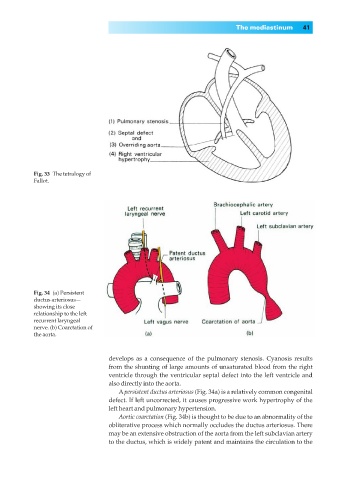
                  Fig. 33◊The tetralogy of
                  Fallot.


                  Fig. 34◊(a) Persistent
                  ductus arteriosus—
                  showing its close
                  relationship to the left
                  recurrent laryngeal
                  nerve. (b) Coarctation of
                  the aorta.


                                        develops as a consequence of the pulmonary stenosis. Cyanosis results
                                        from the shunting of large amounts of unsaturated blood from the right
                                        ventricle through the ventricular septal defect into the left ventricle and
                                        also directly into the aorta.
                                          Apersistent ductus arteriosus (Fig. 34a) is a relatively common congenital
                                        defect. If left uncorrected, it causes progressive work hypertrophy of the
                                        left heart and pulmonary hypertension.
                                          Aortic coarctation (Fig. 34b) is thought to be due to an abnormality of the
                                        obliterative process which normally occludes the ductus arteriosus. There
                                        may be an extensive obstruction of the aorta from the left subclavian artery
                                        to the ductus, which is widely patent and maintains the circulation to the

