


Page 457 - Clinical Application of Mechanical Ventilation
P. 457
Pharmacotherapy for Mechanical Ventilation  423


                                                                                                    Stimulants
                                                                                                  (Phenylephrine)
                                                                                  Alpha-1
                                                                                                Inhibitors-Nonspecific
                                                                                                  (Phentolamine)
                                                                                  Alpha-2
                                                                                               Stimulants (Clonidine)


                                                                  Sympathetic
                                                                   Pathway                       *Primarily Beta-1,
                                                                  (Adrenergic                      Mild Beta-2
                                                                   Receptors)     Beta-1
                                                                                                   Inhibitors
                                                                                               (Esmolol, Atenolol)


                                                                                                    Inhibitors
                                                                                               (Experimental Use Only)
                                             Autonomic Nervous
                                               System Agents                      Beta-2
                                                                                                    Stimulants
                                                                                               (Albuterol, Formoterol)
                                                                                                Commonly Used for
                                                                                                Bronchodilator Effect

                                                                                              Inhibitors – Anticholinergic
                                                                                              (Ipratropium, Tiotropium)
                                                                     Parasympathetic Pathway
                                                                      (Cholinergic Receptors)                       © Cengage Learning 2014
                                                                                              Stimulants – Cholinergic
                                                                                                  (Methacholine)
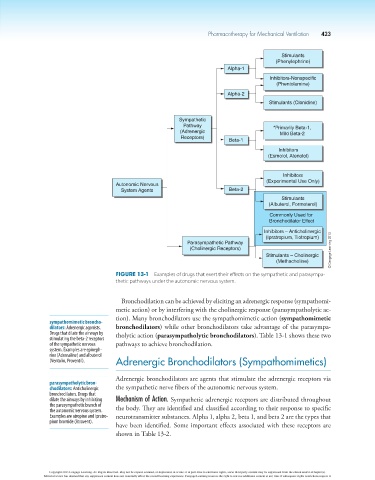
                                             Figure 13-1  Examples of drugs that exert their effects on the sympathetic and parasympa-
                                             thetic pathways under the autonomic nervous system.


                                               Bronchodilation can be achieved by eliciting an adrenergic response (sympathomi-
                                             metic action) or by interfering with the cholinergic response (parasympatholytic ac-
                                             tion). Many bronchodilators use the sympathomimetic action (sympathomimetic
                        sympathomimetic broncho-
                        dilators: Adrenergic agonists.   bronchodilators) while other bronchodilators take advantage of the parasympa-
                        Drugs that dilate the airways by   tholytic action (parasympatholytic bronchodilators). Table 13-1 shows these two
                        stimulating the beta-2 receptors
                        of the sympathetic nervous   pathways to achieve bronchodilation.
                        system. Examples are epineph-
                        rine (Adrenaline) and albuterol
                        (Ventolin, Proventil).  Adrenergic Bronchodilators (Sympathomimetics)

                                             Adrenergic bronchodilators are agents that stimulate the adrenergic receptors via
                        parasympatholytic bron-
                        chodilators: Anticholinergic   the sympathetic nerve fibers of the autonomic nervous system.
                        bronchodilators. Drugs that
                        dilate the airways by inhibiting   Mechanism of Action. Sympathetic adrenergic receptors are distributed throughout
                        the parasympathetic branch of
                        the autonomic nervous system.   the body. They are identified and classified according to their response to specific
                        Examples are atropine and ipratro-  neurotransmitter substances. Alpha 1, alpha 2, beta 1, and beta 2 are the types that
                        pium bromide (Atrovent).
                                             have been identified. Some important effects associated with these receptors are
                                             shown in Table 13-2.


                        Copyright 2013 Cengage Learning. All Rights Reserved. May not be copied, scanned, or duplicated, in whole or in part. Due to electronic rights, some third party content may be suppressed from the eBook and/or eChapter(s).
                      Editorial review has deemed that any suppressed content does not materially affect the overall learning experience. Cengage Learning reserves the right to remove additional content at any time if subsequent rights restrictions require it.

