


Page 1033 - Hematology_ Basic Principles and Practice ( PDFDrive )
P. 1033
916    Part VII  Hematologic Malignancies


                                     Under 60                                          Over 60
                          Abn(3q)
                            2%
                                  Other
                     17p          9%
                     1%   11q23                                                  Other
             Abnormal 7    4%                                                     25%
                   1%
                                                               Abn(3q)
            Abnormal 5
                  4%                                               2%
                                           Normal                11q23                       Normal
                       inv(16)              44%                    2%                         47%
                        6%                                              17p
                                                                        5%
                        t(18;21)                             Abnormal 7
                          8%                                       5%
                                                                           Abnormal 5
                            Trisomy 8                                         13%
                              7%                                                         Trisomy 8
                                    t(15;17)
                                     8%                                                    12%    t(15;17)
                                                                             inv(16)                2%
                                                                              3%     t(18;21)
                                                                                      2%
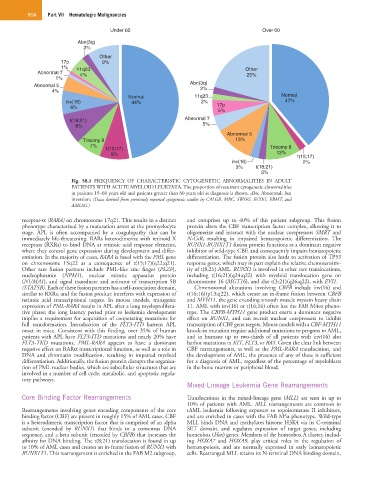
                        Fig.  58.1  FREQUENCY  OF  CHARACTERISTIC  CYTOGENETIC  ABNORMALITIES  IN  ADULT
                        PATIENTS WITH ACUTE MYELOID LEUKEMIA. The proportion of recurrent cytogenetic abnormalities
                        in patients 15–60 years old and patients greater than 60 years old at diagnosis is shown. Abn, Abnormal; Inv,
                        inversion; (Data derived from previously reported cytogenetic studies by CALGB, MRC, SWOG, ECOG, EBMT, and
                        AMLSG.)

        receptor-α (RARA) on chromosome 17q21. This results in a distinct   and  comprises  up  to  40%  of  this  patient  subgroup.  This  fusion
        phenotype characterized by a maturation arrest at the promyelocyte   protein alters the CBF transcription factor complex, allowing it to
        stage.  APL  is  often  accompanied  by  a  coagulopathy  that  can  be   oligomerize  and  interact  with  the  nuclear  corepressors  SMRT  and
        immediately life-threatening. RARs heterodimerize with retinoid X   N-CoR,  resulting  in  impaired  hematopoietic  differentiation.  The
        receptors (RXRs) to bind DNA at retinoic acid response elements,   RUNX1-RUNX1T1 fusion protein functions as a dominant negative
        where they control gene expression during development and differ-  inhibitor of wild-type CBF, and consequently impairs hematopoietic
        entiation. In the majority of cases, RARA is fused with the PML gene   differentiation. The fusion protein also leads to activation of TP53
        on  chromosome  15q22  as  a  consequence  of  t(15;17)(q22;q21).   response genes, which may in part explain the relative chemosensitiv-
        Other  rare  fusion  partners  include  PML-like  zinc  finger  (PLZF),   ity of t(8;21) AML. RUNX1 is involved in other rare translocations,
        nucleophosmin  (NPM1),  nuclear  mitotic  apparatus  protein   including  t(16;21)(q24;q22)  with  myeloid  translocation  gene  on
        (NUMA1), and signal transducer and activator of transcription 5B   chromosome 16 (MGT16), and also t(3;21)(q26;q22), with EVI1.
        (STAT5B). Each of these fusion partners has a self-association domain,   Chromosomal  alterations  involving  CBFB  include  inv(16)  and
        similar to RXRs, and the fusion product interferes with expression of   t(16;16)(p13;q22), which create an in-frame fusion between CBFB
        retinoic  acid  transcriptional  targets.  In  mouse  models,  transgenic   and MYH11, the gene encoding smooth muscle myosin heavy chain
        expression of PML-RARA results in APL after a long myeloprolifera-  11. AML with inv(16) or t(16;16) often has the FAB M4eo pheno-
        tive phase; the long latency period prior to leukemia development   type. The CBFB-MYH11 gene product exerts a dominant negative
        implies a requirement for acquisition of cooperating mutations for   effect  on  RUNX1,  and  can  recruit  nuclear  corepressors  to  inhibit
        full  transformation.  Introduction  of  the  FLT3-ITD  hastens  APL   transcription of CBF gene targets. Mouse models with a CBF-MYH11
        onset  in  mice.  Consistent  with  this  finding,  over  35%  of  human   knock-in mutation require additional mutations to progress to AML,
        patients with APL have FLT3-ITD mutations and nearly 20% have   and  in  humans  up  to  two-thirds  of  all  patients  with  inv(16)  also
        FLT3-TKD  mutations.  PML-RARA  appears  to  have  a  dominant   harbor mutations in KIT, FLT3, or RAS. Given the clear link between
        negative effect on RARα transcriptional function, as well as a role in   CBF rearrangements, as well as the PML-RARA translocation, and
        DNA  and  chromatin  modification,  resulting  in  impaired  myeloid   the development of AML, the presence of any of these is sufficient
        differentiation. Additionally, the fusion protein disrupts the organiza-  for a diagnosis of AML, regardless of the percentage of myeloblasts
        tion of PML nuclear bodies, which are subcellular structures that are   in the bone marrow or peripheral blood.
        involved in a number of cell cycle, metabolic, and apoptotic regula-
        tory pathways.
                                                              Mixed-Lineage Leukemia Gene Rearrangements
        Core Binding Factor Rearrangements                    Translocations in the mixed-lineage gene (MLL) are seen in up to
                                                              10% of patients with AML. MLL rearrangements are common in
        Rearrangements involving genes encoding components of the core   tAML leukemia following exposure to topoisomerase II inhibitors,
        binding factor (CBF) are present in roughly 15% of AML cases. CBF   and are enriched in cases with the FAB M5a phenotype. Wild-type
        is a heterodimeric transcription factor that is comprised of an alpha   MLL binds DNA and methylates histone H3K4 via its C-terminal
        subunit  (encoded  by  RUNX1)  that  binds  to  a  consensus  DNA   SET  domain,  and  regulates  expression  of  target  genes,  including
        sequence, and a beta subunit (encoded by CBFB) that increases the   homeobox (Hox) genes. Members of the homeobox A cluster, includ-
        affinity for DNA binding. The t(8;21) translocation is found in up   ing  HOXA7  and  HOXA9,  play  critical  roles  in  the  regulation  of
        to 10% of AML cases and creates an in-frame fusion of RUNX1 with   hematopoiesis,  and  are  normally  expressed  in  early  hematopoietic
        RUNX1T1. This rearrangement is enriched in the FAB M2 subgroup,   cells. Rearranged MLL retains its N-terminal DNA binding domain,

