


Page 1642 - Hematology_ Basic Principles and Practice ( PDFDrive )
P. 1642
Chapter 90  Psychosocial Aspects of Hematologic Disorders  1463


             Initial symptoms                                               Factors That May Predict Poor Coping in Patients With
                                                                   BOX 90.1  Cancer

                                                                   Past psychiatric history
                Workup          Diagnosis
                                                                   Compliance issues
                                                                   Demographic factors such as younger age and female sex
                                                                   Limited social support or difficult social relationships
                                                                   Recent history of smoking cessation
               No curative attempt         Curative attempt        Substance abuse history
                                                                   Recent losses
                                                                   Advanced disease
               Progressive disease  Remission        No response   Uncontrolled symptoms
                                                                   Pessimistic outlook on life
                                                                   Multiple obligations
                                                                   Avoidance coping (escape-avoidance, distancing, and denial)
                    Death                                          Lower functional status
                                          Relapse
                                                                   Higher regimen-related toxicity

                                         Treatment
                                                                  diagnosis  of  cancer  are  vital.  Patients  who  have  a  pervasive  and
                                                                  unyielding negative affect that persists long after the crisis of diagnosis
                                         Remission                may require ongoing psychosocial monitoring and referral for services
                                                                  and supportive interventions throughout their treatment and disease
                            Long-term              Progressive         24
                             survival                disease      course.
                                                                    In addition, family assessment during this phase is vital. Levels of
                                                                  family distress, depression, and anxiety are mediated by the function-
                                                                                                 24
                                                      Death       ing of the family at the time of diagnosis.  Studies have shown that
                                                                                                                   24
                                                                  caregivers  and  families  share  similar  rates  of  psychosocial  angst.
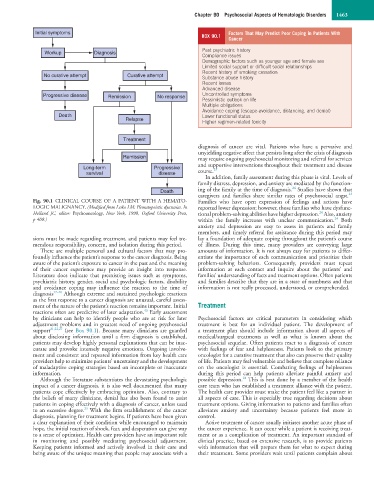
            Fig.  90.1  CLINICAL  COURSE  OF  A  PATIENT WITH  A  HEMATO-  Families  who  have  open  expression  of  feelings  and  actions  have
            LOGIC MALIGNANCY. (Modified from Lesko LM: Hematopoietic dyscrasias. In   reported lower depression; however, those families who have dysfunc-
            Holland  JC,  editor:  Psychooncology,  New  York,  1998,  Oxford  University  Press,   tional problem-solving abilities have higher depression.  Also, anxiety
                                                                                                         24
                                                                                                              24
            p 408.)                                               within  the  family  increases  with  unclear  communication.   Both
                                                                  anxiety  and  depression  are  easy  to  assess  in  patients  and  family
                                                                  members, and timely referral for assistance during this period may
            sions must be made regarding treatment, and patients may feel tre-  lay a foundation of adequate coping throughout the patient’s course
            mendous responsibility, concern, and isolation during this period.  of  illness.  During  this  time,  many  providers  are  conveying  large
              There  are  multiple  personal  and  cultural  factors  that  may  pro-  amounts of information. It is not always easy for patients to differ-
            foundly influence the patient’s response to the cancer diagnosis. Being   entiate the importance of each communication and prioritize their
            aware of the patient’s exposure to cancer in the past and the meaning   problem-solving  behaviors.  Consequently,  providers  must  repeat
            of  their  cancer  experience  may  provide  an  insight  into  response.   information  at  each  contact  and  inquire  about  the  patients’  and
            Literature  does  indicate  that  preexisting  issues  such  as  symptoms,   families’ understanding of facts and treatment options. Often patients
            psychiatric history, gender, social and psychologic factors, disability   and families describe that they are in a state of numbness and that
            and  avoidance  coping  may  influence  the  reaction  to  the  time  of   information is not really processed, understood, or comprehended.
            diagnosis 17–20  Although extreme and sustained psychologic reactions
            as the first response to a cancer diagnosis are unusual, careful assess-
            ment of the nature of the patient’s reaction remains important. Initial   Treatment
                                                43
            reactions often are predictive of later adaptation.  Early assessment
            by  clinicians  can  help  to  identify  people  who  are  at  risk  for  later   Psychosocial  factors  are  critical  parameters  in  considering  which
            adjustment problems and in greatest need of ongoing psychosocial   treatment  is  best  for  an  individual  patient.  The  development  of
            support 21,22,27  (see Box 90.1). Because many clinicians are guarded   a  treatment  plan  should  include  information  about  all  aspects  of
            about  disclosing  information  until  a  firm  diagnosis  is  established,   medical/surgical  treatments  as  well  as  what  is  known  about  the
            patients may develop highly personal explanations that can be inac-  psychosocial sequelae. Often patients react to a diagnosis of cancer
            curate and provoke intensely negative emotions. Ongoing involve-  with feelings of fear and helplessness. Patients look to the primary
            ment and consistent and repeated information from key health care   oncologist for a curative treatment that also can preserve their quality
            providers help to minimize patients’ uncertainty and the development   of life. Patients may feel vulnerable and believe that complete reliance
            of maladaptive coping strategies based on incomplete or inaccurate   on  the  oncologist  is  essential.  Combating  feelings  of  helplessness
            information.                                          during  this  period  can  help  patients  alleviate  painful  anxiety  and
                                                                                18
              Although the literature substantiates the devastating psychologic   possible depression.  This is best done by a member of the health
            impact of a cancer diagnosis, it is also well documented that many   care team who has established a treatment alliance with the patient.
            patients cope effectively by embracing optimism. Also, contrary to   The health care provider must make the patient feel like a partner in
            the beliefs of many clinicians, denial has also been found to assist   all aspects of care. This is especially true regarding decisions about
            patients in coping effectively with a diagnosis of cancer, unless used   treatment options. Giving information to patients and families often
                             23
            to an excessive degree.  With the firm establishment of the cancer   alleviates  anxiety  and  uncertainty  because  patients  feel  more  in
            diagnosis, planning for treatment begins. If patients have been given   control.
            a clear explanation of their condition while encouraged to maintain   Active treatment of cancer usually initiates another acute phase of
            hope, the initial reaction of shock, fear, and desperation can give way   the cancer experience. It can occur while a patient is receiving treat-
            to a sense of optimism. Health care providers have an important role   ment or as a complication of treatment. An important standard of
            in  monitoring  and  possibly  mediating  psychosocial  adjustment.   clinical practice, based on extensive research, is to provide patients
            Keeping patients informed and actively involved in their care and   with information that will prepare them for what to expect during
            being aware of the unique meaning that people may associate with a   their treatment. Some providers wait until patients complain about

