


Page 1711 - Hematology_ Basic Principles and Practice ( PDFDrive )
P. 1711
Chapter 95  Practical Aspects of Hematologic Stem Cell Harvesting and Mobilization  1521


                                                                  for storage with either in utero or ex utero collection techniques. The
                                                                  timing of cord clamping after delivery of the infant is associated with
                                                                  the volume of cord blood collected, and greater volumes are collected
                                                                  with earlier clamping. Greater cell quantities were found for infants
                                                                  with  greater  birth  weight,  but  no  difference  was  found  based  on
                                                                  gender or gestational age. Ethnic background appears to predict the
                                                                  cell quantities, with smaller quantities of cells collected from ethnic
                                                                                           45
                                                                  minorities compared with whites.  UCB is usually collected by can-
                                                                  nulation of the umbilical cord veins with aspiration of the blood into
                                                                  a collection bag. Collection of cord blood into open containers results
                                                                  in an unacceptable rate of bacterial contamination. Perfusion of the
                                                                  placenta with salt solutions may increase the cell number collected,
                                                                  but this technique has not been widely adopted. Many cord blood
                                                                  banks  reduce  the  volume  of  the  product  by  red  cell  and  plasma
                                                                  depletion to minimize storage space and to reduce possible infusion-
                                                                  related toxicities from mature blood cells contained in unfractionated
                                                                               46
                                                                  cord blood units.  Bacterial contamination of UCB products is of
                                                                  concern,  especially  in  the  collection  of  products  for  related  donor
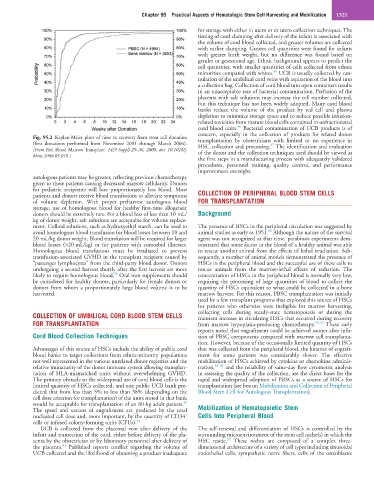
            Fig. 95.2  Kaplan-Meier plots of time to recovery from stem cell donation   transplantation  by  obstetricians  with  limited  or  no  experience  in
            (first  donations  performed  from  November  2001  through  March  2006).   HSC collection and processing.  The identification and evaluation
                                                                                         47
            (From Biol Blood Marrow Transplant. 14[9 Suppl]:29–36, 2008, doi: 10.1016/j.  of the donor and the collection techniques used should be viewed as
            bbmt.2008.05.018.)
                                                                  the first steps in a manufacturing process with adequately validated
                                                                  procedures,  personnel  training,  quality  control,  and  performance
                                                                  improvement oversight.
            autologous patients may be greater, reflecting previous chemotherapy
            given to these patients causing decreased marrow cellularity. Donors
            for  pediatric  recipients  will  lose  proportionately  less  blood.  Most
            patients and donors receive blood transfusions to alleviate symptoms   COLLECTION OF PERIPHERAL BLOOD STEM CELLS
            of  volume  depletion.  With  proper  preharvest  autologous  blood   FOR TRANSPLANTATION
            storage,  use  of  homologous  blood  for  healthy  first-time  allogeneic
            donors should be extremely rare. For a blood loss of less than 10 mL/  Background
            kg of donor weight, salt solutions are acceptable for volume replace-
            ment. Colloid solutions, such as hydroxyethyl starch, can be used to   The presence of HSCs in the peripheral circulation was suggested by
                                                                                         48
            avoid homologous blood transfusion for blood losses between 10 and   animal studies as early as 1951.  Although the nature of the survival
            20 mL/kg donor weight. Blood transfusion will be required for larger   agent was not recognized at that time, parabiosis experiments dem-
            blood  losses  (>20 mL/kg)  or  for  patients  with  comorbid  illnesses.   onstrated that some factor in the blood of a healthy animal was able
            Homologous  blood  transfusions  must  be  irradiated  to  prevent   to rescue another animal from the effects of lethal irradiation. Sub-
            transfusion-associated GVHD in the transplant recipient caused by   sequently, a number of animal models demonstrated the presence of
            “passenger lymphocytes” from the third-party blood donor. Donors   HSCs in the peripheral blood and the successful use of these cells to
            undergoing a second harvest shortly after the first harvest are more   rescue  animals  from  the  marrow-lethal  effects  of  radiation.  The
                                      24
            likely to require homologous blood.  Oral iron supplements should   concentration of HSCs in the peripheral blood is normally very low,
            be considered for healthy donors, particularly for female donors or   requiring the processing of large quantities of blood to collect the
            donors from whom a proportionately large blood volume is to be   quantity of HSCs equivalent to what could be collected in a bone
            harvested.                                            marrow harvest. For this reason, PBSC transplantation was initially
                                                                  used by a few transplant programs that explored this source of HSCs
                                                                  for  patients  who  otherwise  were  ineligible  for  marrow  harvesting,
            COLLECTION OF UMBILICAL CORD BLOOD STEM CELLS         collecting  cells  during  steady-state  hematopoiesis  or  during  the
                                                                  transient increase in circulating HSCs that occurred during recovery
            FOR TRANSPLANTATION                                   from  marrow  hypoplasia-producing  chemotherapy. 49–53  These  early
                                                                  reports noted that engraftment could be achieved sooner after infu-
            Cord Blood Collection Techniques                      sion of PBSC components compared with marrow cell transplanta-
                                                                  tion. However, because of the occasionally limited quantity of HSCs
            Advantages of this source of HSCs include the ability of public cord   that was collected from the peripheral blood, the kinetics of engraft-
            blood banks to target collections from ethnic-minority populations   ment  for  some  patients  was  considerably  slower.  The  effective
            not well represented in the various unrelated donor registries and the   mobilization of HSCs achieved by cytokine or chemokine adminis-
            relative immaturity of the donor immune system allowing transplan-  tration, 54–56  and the reliability of same-day flow cytometric analysis
            tation  of  HLA-mismatched  units  without  overwhelming  GVHD.   in assessing the quality of the collection, are the direct bases for the
            The primary obstacle to the widespread use of cord blood cells is the   rapid and widespread adoption of PBSCs as a source of HSCs for
            limited quantity of HSCs collected, and one public UCB bank pre-  transplantation (see box on Mobilization and Collection of Peripheral
            dicted that from less than 5% to less than 38% (depending on the   Blood Stem Cell for Autologous Transplantation).
            cell dose criterion for transplantation) of the units stored in that bank
                                                             43
            would be acceptable for transplantation of an 80-kg adult patient.
            The  speed  and  success  of  engraftment  are  predicted  by  the  total   Mobilization of Hematopoietic Stem
                                                              +
            nucleated cell dose and, more important, by the quantity of CD34    Cells Into Peripheral Blood
            cells or infused colony-forming units (CFUs). 44
              UCB  is  collected  from  the  placental  vein  after  delivery  of  the   The  self-renewal  and  differentiation  of  HSCs  is  controlled  by  the
            infant and transection of the cord, either before delivery of the pla-  surrounding microenvironment of the stem cell niche(s) in which the
                                                                           57
            centa by the obstetrician or by laboratory personnel after delivery of   HSC  reside.   These  niches  are  composed  of  a  complex  three-
                     43
            the  placenta.   Published  reports  conflict  regarding  the  volume  of   dimensional architecture of a variety of cell types including sinusoidal
            UCB collected and the likelihood of obtaining a product inadequate   endothelial  cells,  sympathetic  nerve  fibers,  cells  of  the  osteoblastic

